Injectables plant
An injectables plant uses a hard borewell supply, with hardness above 300 ppm and silica above 20 ppm. It gets softening, antiscalant dosing, two-pass reverse osmosis, EDI and a multi-column still for WFI.
Fabtech designs, supplies and qualifies the complete water system for a pharma plant: purified water, WFI and pure steam, with 2000+ installations in 65+ countries. Every batch you make starts with water. Water is the largest single ingredient in most medicines. It is also the one utility that reaches every room in the plant. If the water is wrong, the whole plant has to wait.
We reply within 24 hours.
Qualification is written proof that a system works as it should. Water treatment in the pharmaceutical industry covers purified water, water for injection and pure steam.
It also covers the storage and distribution loops. These carry the water to every point of use.
One Fabtech team does the whole job, from raw-water analysis to qualification.
Key fact Detail
Fabtech supplies every part of the system, from the treatment of your source water to the loop that reaches each point of use.
A water system in the pharmaceutical industry is the equipment that turns source water into purified water (PW) and water for injection (WFI). It makes the water, stores it and sends it to where it is used.
WFI is the grade of water used to make injectable drugs.
The system uses multi-stage filtration and membrane purification. For WFI, it also uses distillation.
It then keeps the water at pharmacopoeial quality until it is used. This means the water meets the limits in the official drug standards, called pharmacopoeias.
Pure steam is made from the same purified water. Chilled water is an HVAC (heating, ventilation and air conditioning) utility.
It is not a pharma water grade.
Our beginner's guide to purified water generation systems explains each stage in plain language, from raw-water analysis to distillation.
Fabtech supplies each system below on its own skids.
A skid is a frame that holds the equipment as one unit. Each system comes with its own documents.
The linked pages give the full specs.
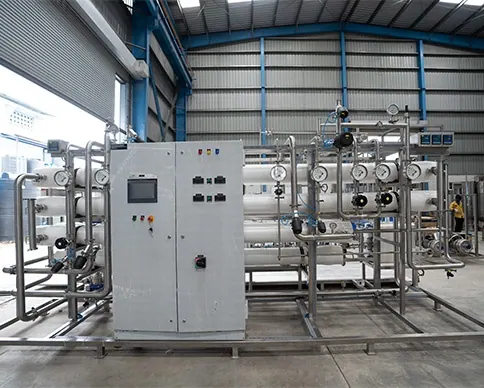
Pre-treatment including ultrafiltration, then reverse osmosis (RO), EDI (electrodeionization) and UV. A closed loop carries the water to every user point. Purified water is the main grade for oral solids, liquids and cleaning. If you are looking for a purified water generation system manufacturer, Fabtech designs and supplies the system and stays responsible for it.
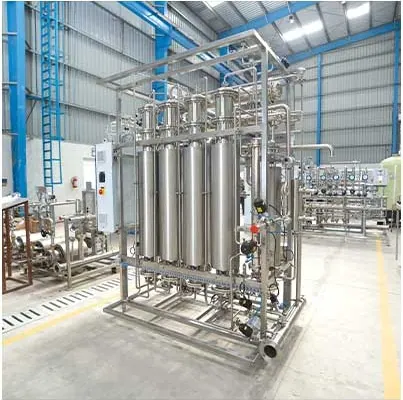
Multi-column distillation of purified water, for injectables and biologics. Multi-column distillation is the generation technology. The WFI is kept hot in a circulating loop. WFI production capacities run from small pilot stills to plant-scale output. We size the still to the plant.
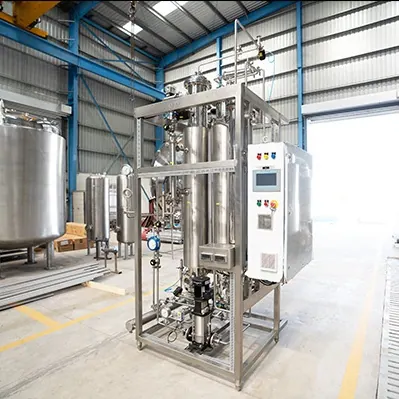
Pyrogen-free steam, made from purified water. Pyrogens are substances that cause fever. The steam sterilises equipment and humidifies clean areas. It is available as a combi unit with the WFI still.
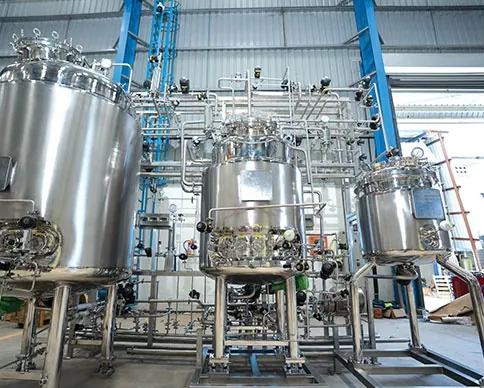
Preparation, storage and buffer tanks in electropolished stainless steel. Electropolishing makes the steel surface very smooth. CIP and SIP connections are built in.
Clean-in-place and sterilise-in-place skids. They clean and sterilise equipment where it stands. They use the purified water and pure steam the plant already makes. This cuts downtime and manual work between batches.
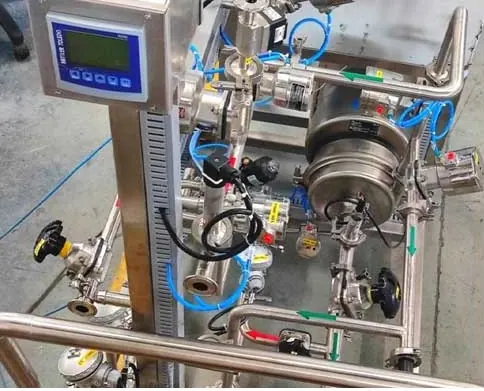
Chillers, cooling towers and the high-side plant. They serve the HVAC and process cooling loads.
Compressed air, plant steam, softened water and the connections between them. We plan them together with the process design. Scoped per project
The generation systems come as standard or compact skids. Each comes in an automatic or semi-automatic version.
They have validated interlocks. An interlock is an automatic control that stops a step until its conditions are met.
We describe the control system under standards below. Flow rates run from 500 to 50,000 litres per hour.
Utilities include nitrogen generators, complete process piping, compressor and air piping solutions. Interconnecting piping between reactors, manufacturing vessels, bulk storage tanks and API storage vessels is in complete SS 316L with orbital welding.
Air is distributed to all user points with the help of SS pipes. We also supply complete firefighting solutions, including the installation of fire fighting pumps, hydrant systems, piping and sprinklers.
No single water system is right for every plant.
The design depends on the water from your borewell or city supply. It also depends on what you make, how much you make, and which inspectors will visit your plant.
We start every project with the same five questions. The answers decide the design.
| Decision | What we look at | What it changes |
|---|---|---|
| Source water quality | A full raw-water analysis: hardness, silica, chlorine, TDS, silt density index, microbial count | The pre-treatment train: filtration, softening, dechlorination, dosing, ultrafiltration |
| Target grade | Purified water only, or purified water plus WFI and pure steam | Whether a distillation stage and a hot loop are needed |
| Capacity and peak demand | Batch sizes, number of user points, cleaning schedules, future lines | Generation rate, storage volume, loop sizing and pump selection |
| Sanitisation strategy | Hot water sanitisable RO (HSRO) or chemically sanitisable RO (CSRO), ozone or hot-water loop sanitisation | Materials, heat exchangers, control sequences and the validation approach |
| Regulatory target | USP, EP or IP monographs, and the inspections you expect from USFDA (United States), MHRA (United Kingdom), TGA (Australia) or WHO | Instrumentation, data integrity, alarm philosophy and the documentation package |
A treatment train is the series of steps that cleans the water. Two worked examples show how the table sets the train.
An injectables plant uses a hard borewell supply, with hardness above 300 ppm and silica above 20 ppm. It gets softening, antiscalant dosing, two-pass reverse osmosis, EDI and a multi-column still for WFI.
An oral solids plant uses a soft municipal supply. It gets multigrade filtration, carbon, single-pass RO and EDI, with a hot-water sanitised loop.
The same company supplies two very different skids.
Most of the leading packaged water purification systems will meet USP and WFI standards on the day they are commissioned. The design decisions above keep a system at that standard for the next fifteen years.
We size the polishing stage, the deionization stage and the storage loop together. Polishing is the final cleaning step.
If the loop runs too slowly, or the tank is too large, biofilm grows. This happens even with a good generation skid.
Biofilm is a layer of bacteria that sticks to pipe and tank walls. We engineer customizable deionized water systems for high-purity pharmaceutical applications.
Each one matches the raw water and the demand. Plants trying to find top-rated industrial deionization services for an existing train get the same review first.
Every Fabtech water system is built to the same set of standards.
The inspector checks water samples from the loop against them. Our documents use the words an auditor looks for.
The water grades follow the USP, EP and IP monographs for purified water and water for injection. These are the United States, European and Indian pharmacopoeias.
A monograph sets the limits for one grade of water. We specify ultrapure water only where a process really needs it.
The API is the active drug substance in a medicine. For API manufacturing in India, the design documents cite the IP and EP pharmacopoeial standards as well as the USP.
Fabrication follows ASME BPE, the standard for hygienic piping. In practice this means:
Orbital welding, with boroscopy and videoscopy to check each weld. These use a camera inside the pipe.
Electropolished internals.
Fully drainable field piping.
Zero dead leg diaphragm valves.
Piping dead legs kept within the ASME BPE limit. A dead leg is a pipe section where water stands still.
Control systems are designed for 21 CFR Part 11 where electronic records are used. This is the US FDA rule for electronic records.
We engineer the plant to cGMP, which means current Good Manufacturing Practice. We also engineer it to the ISPE Baseline Guide for water and steam systems.
We document it to withstand inspection by the USFDA, MHRA and TGA.
A water system is finished when the water at the farthest point of use still meets its monograph.
The plant must also have the test data that proves it. This comes well after the skid is delivered.
We deliver that proof as part of our scope. The stages below are the same on every project.
How long each stage takes depends on capacity and site readiness.
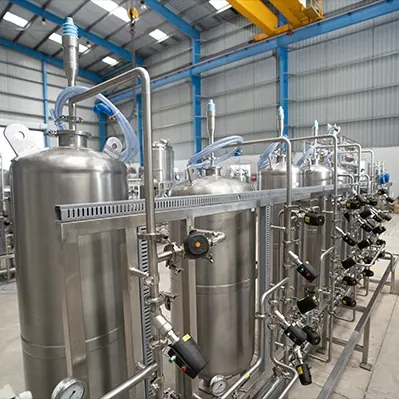
What happensRaw-water analysis, user requirement specification, piping and instrumentation diagrams (P&IDs), layout and loop design
What you receiveDesign qualification (DQ) package
What happensSkids built and tested at the factory before dispatch
What you receiveFactory acceptance test (FAT) protocol and report
What happensSkids positioned, field piping welded and documented, utilities connected
What you receiveWeld logs, boroscopy records, passivation and slope verification
What happensInstallation and operational qualification, then performance qualification across the seasons
What you receiveIQ, OQ and PQ protocols and reports
What happensTraining, SOPs and the complete dossier
What you receiveA system your QA team can defend in an inspection
Buyers ask which vendors offer full turnkey high purity water systems with installation and qualification in India. Not all vendors offer the full turnkey scope: the skid, the installation and the final sign-off.
Turnkey means one company delivers the whole working system. Fabtech does the whole scope.
This is because the water system is usually part of a larger project we are already building. That may be a turnkey pharmaceutical plant or a new injectable block in a running facility.
Our guide to validating high purity water systems explains how validation is planned and what inspectors look for.
Tablet plants are only one type of user.
Water treatment for healthcare and pharmaceuticals, for biotech facilities and for medical products manufacturers uses the same engineering. Each type of site has its own needs.
Pharmaceutical manufacturing. Oral solids such as tablets and capsules, liquids and semi-solids such as creams use purified water.
Injectable drugs and sterile products need WFI and pure steam. We size the water for injection production equipment to the filling line it feeds.
Sites that make many products need loops designed for cleaning between campaigns. A campaign is a run of one product.
Biologics and life sciences. Biologics are medicines made from living cells.
Biologics facilities, vaccine plants and cell culture suites need WFI and clean steam systems. We size these for large buffer and media volumes.
They need tight control of endotoxin and total organic carbon. Endotoxins are toxins from bacteria that cause fever.
Some sites need a hybrid loop. The loop is hot for the bulk WFI demand.
It is at room temperature (ambient) for a few low-volume points. Getting hybrid WFI systems designed and fabricated to custom specifications means sizing that split to the site's actual water use.
API manufacturing. Synthesis plants make the API by chemical reactions.
They need purified water for the reactions and for cleaning. They need WFI where the API is sterile.
Hospitals and healthcare. Central sterile supply departments, dialysis units, ophthalmic (eye care) units and hospital pharmacies each need a set water quality.
Their own rules define it. Companies supplying high purity water systems for hospitals have to design to each of these rules.
Fabtech delivers these systems inside hospital projects.
Laboratories and medical products manufacturers. QC (quality control) labs and medical device makers need smaller systems.
They need the same complete paperwork. Pharmaceutical laboratory water systems are sized for the lab bench instead of the whole plant.
Custom water treatment system designers for pharmaceutical labs do their best work when they keep the documents complete at bench volumes. They do not cut them down.
Fabtech delivers water systems as part of turnkey pharma projects in international markets.
Fabtech has 2000+ installations in 65+ countries. Its turnkey projects in Saudi Arabia, Kenya and Nigeria included purified water or high purity water systems.
Buyers ask which high purity water system suppliers have service engineers available across major pharma hubs in India. Fabtech's project and service teams work from Mumbai.
Fabtech supplies water systems for international projects, so service is arranged for the buyer's country.
Maintenance contracts for high purity water systems are available on the equipment we supply. They cover sanitising, calibration, new membranes and UV lamps.
They also cover support for the yearly requalification.
For export projects, we supply skids made for the power grid in the buyer's country. Pumps, motors, heaters and control panels match the local supply frequency.
We fit 50 Hz or 60 Hz pumps as required. The skids ship with the documents in the format that country's regulator expects.
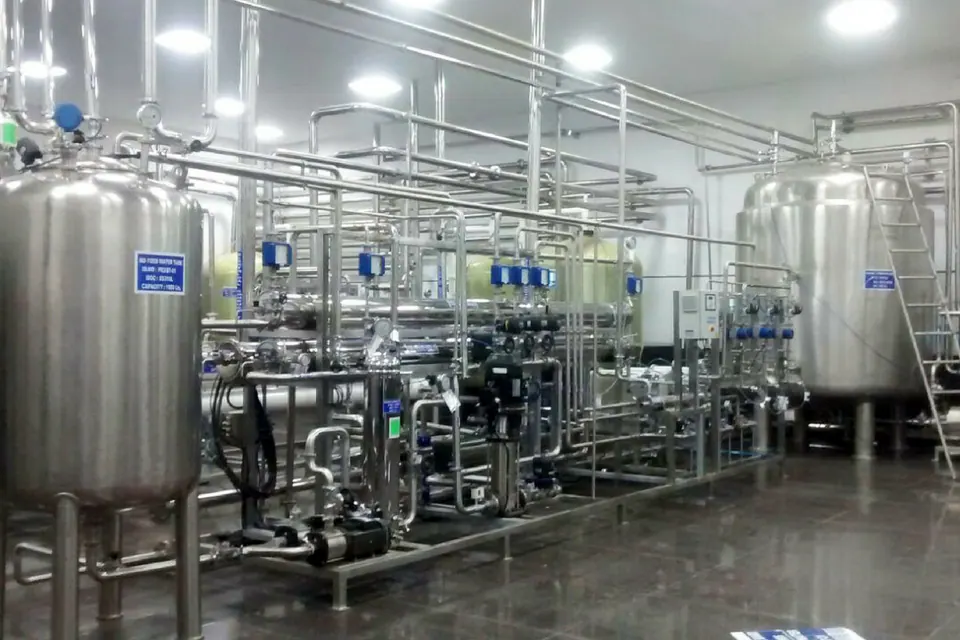
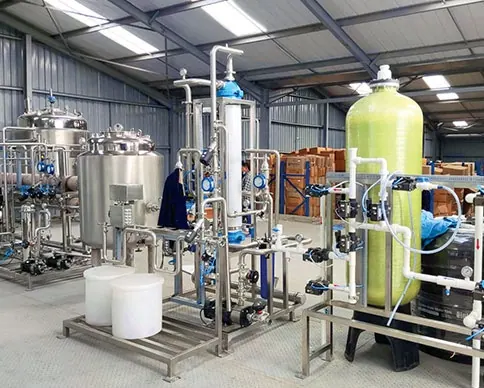
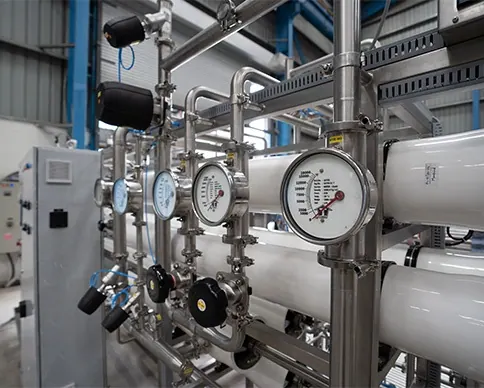
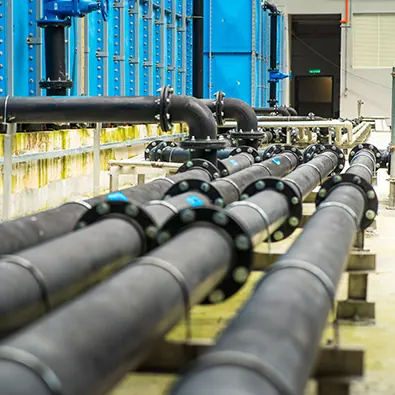
One source, end to end.
One engineering company supplies all of it. This means water generation, storage and distribution, pure steam, and the process vessels they feed. The same company can also design and build the plant around them. We design the links between the systems once and agree them before site work starts. This makes the plant easier to qualify.
Dependable.
Fabtech does the design and the project management itself. It stays responsible for the skids it supplies. We record every weld on the loop by boroscopy before the insulation goes on.
Ingenious.
Our designers and engineers design from your raw-water report and your process. They do not pick a design from a catalogue. They turn advanced pharmaceutical water systems into a design your operators can run.
Compliant.
We design and document our systems to withstand inspection by the USFDA, MHRA and TGA.
Proven.
We deliver purified water, WFI and pure steam systems inside turnkey pharma projects for international buyers.
First comes pre-treatment: filtration, softening, dechlorination and dosing. Then comes generation. This is reverse osmosis, EDI and UV for purified water, and distillation for WFI. Last come storage and a circulating distribution loop to each user point. Pure steam generation is added where equipment must be sterilised. Instruments and controls cover every stage.
Fabtech designs and supplies WFI generation systems, the still or WFI machine itself. Each one uses multi-column distillation. The piping is ASME BPE hygienic piping, and the internals are electropolished. Every system ships with its design, factory test and installation dossier. See the WFI generation systems page for capacities and options.
Buyers usually compare three things. The first is how complete the document package is. The second is the fabrication standard of the piping. The third is how quickly a service engineer can reach the site. We design to the same pharmacopoeial limits as any European still. Our systems are fabricated to ASME BPE, and we support them from India.
In most cases, yes. We can typically add polishing stages such as EDI, UV and final filtration to an existing generation train. We can also re-engineer a loop to raise return velocity and remove dead legs. We usually start with a survey of the current system and its sampling data.
There is no wholesale price list. We size every system to a raw-water report, a capacity and a regulatory target. Send us those three things. You will receive a scoped proposal with a budgetary figure and a delivery schedule.
Yes, where the destination grid runs at 60 Hz, as in Saudi Arabia or the Americas. Most of Africa, the Middle East and Asia run at 50 Hz and get 50 Hz equipment. We specify pumps, motors, heaters and panels to the country's power supply.
Rouge is a film of iron oxides that forms on stainless steel in hot WFI systems. We design to limit it with electropolished surfaces and correct passivation. Passivation is a chemical treatment that protects the steel surface. An affected tank or loop would typically be treated by chemical derouging, repassivation and requalification.
WFI loops are held hot, typically at 80 to 85 degrees Celsius. Heat keeps microbial growth down without chemicals. Purified water loops use hot-water sanitisation, ozone or a validated chemical sanitisation cycle. We choose the method at design stage to suit the materials and site procedures. We test and track the water at every point of use.
Yes. The engineering is the same. We scale the capacity and the depth of the documents to the site. Hospital projects, QC labs and medical device plants each get a system. It is specified to the water quality their own rules require.
Most pharmaceutical processes do not need ultrapure water. They need purified water or WFI that reliably meets its monograph. Specify the grade the product actually requires. Then design the generation train and loop to keep the water at that grade. Over-specifying adds cost. It also adds surfaces that need to be validated.
Fabtech supplies water systems to international buyers. Fabtech has 2000+ installations in 65+ countries. A water system is usually part of a turnkey pharma project. It can also serve one new block in a running plant.
Send us your raw-water report and capacity and we will scope the system
There is no obligation. You get a clear answer on the treatment train, the grade you need and the qualification effort.
We reply within 24 hours.