Positive-pressure suit
BSL-4 adds a full-body positive-pressure suit or a Class III cabinet line. The suit has its own dedicated air supply.
At biosafety level 3, the main danger is the air.
Fabtech built the region's first BSL-3 laboratory, for the Government of Uttar Pradesh at the Autonomous State Medical College in Shahjahanpur, India.
We reply within 24 hours.
Lower levels also control the risk of breathing in a germ. They do it with a safety cabinet and good work practice.
At BSL-3, this risk shapes the whole building. It decides which way the air moves, where the air is filtered, and how people go in and out.
A BSL-3 laboratory is a high-containment facility. This means it is built to keep dangerous germs inside.
It is used for pathogens (germs that cause disease) that can be breathed in and can cause serious or lethal disease. Tuberculosis and SARS-CoV-2 are familiar examples.
Fabtech designs, builds and qualifies BSL-3 laboratories. To qualify a lab means to test it and prove in writing that it works as designed.
We delivered the Shahjahanpur lab during the second Covid-19 lockdown. We built it in 950 sqft, where the optimum is 1,500 sqft. The nearest power was 650 metres away, and there was no air handling unit on site.
You can read how we did it at the end of this page.
Key fact Detail
Fabtech takes on the whole BSL-3 facility: civil rework, air handling, services, containment and qualification.
Biosafety levels go from 1 to 4. The level depends on the agent, which is the germ or other biological material being handled.
Four things decide the level: how infectious the agent is, how it spreads, how severe the disease is, and whether a treatment or a vaccine exists. Each level adds more controls on top of the level below it.
At BSL-3, the main risk is aerosol transmission. This means the germ spreads through very small drops in the air.
A person can be infected just by breathing the air. So at this level, containment is no longer mainly about surfaces and gloves.
It is about airflow.
The room is kept at negative pressure, so air always moves into the room and not out of it. HEPA (high-efficiency particulate air) filters clean the exhaust air before it leaves.
People enter through an anteroom, a small room between the corridor and the lab. Its doors are interlocked or self-closing.
Access is controlled. Staff are under medical surveillance, which means their health is checked regularly.
"BSL-3" and "BSL 3" mean the same thing. So do "BSL3", "BSL class III" and "biosafety level 3".
Only the spelling is different. A BSL3 facility and a BSL-3 facility are the same facility.
| BSL-1 | BSL-2 | BSL-3 | BSL-4 | |
|---|---|---|---|---|
| Containment | None | Moderate | High containment under appropriate government agencies, with strict medical surveillance of personnel | Maximum containment |
| Pathogen type | Agents not known to cause disease in healthy adults | Agents that pose a risk if accidentally inhaled, swallowed or absorbed through skin | Agents that may be transmitted through air, causing potentially lethal infection through inhalation | Agents posing a high risk of aerosol-transmitted infection and life-threatening disease for which no vaccine or therapy exists |
| Sample organism | E. coli | Influenza | Tuberculosis, Covid-19 | Ebola virus |
The easiest way to understand BSL-3 is to look at the agents handled at this level.
BSL-3 agents typically include Mycobacterium tuberculosis (the cause of tuberculosis), SARS-CoV-2 and the original SARS coronavirus, yellow fever virus, West Nile virus, Coxiella burnetii (Q fever), Brucella species and Francisella tularensis.
All of these agents can infect a person who breathes them in. This is why the engineering answer is directional airflow instead of a stronger cabinet.
Directional airflow means the air always moves in one planned direction.
Much of everyday medicine depends on this work. Tuberculosis diagnosis, the Covid-19 test used during the pandemic, and the vaccine research behind both all need BSL 3 containment before the medicine reaches anyone.
Where the laboratory is part of a vaccine or biologics plant, our page on vaccine manufacturing facility design covers the whole plant.
The same organism can need different levels. It depends on the work being done with it.
Diagnostic work on a clinical sample may be BSL-2. Culturing (growing more of the organism) and concentrating the same organism is BSL-3.
This is because culturing creates aerosols and diagnostic work does not. The activity sets the level as much as the agent does.
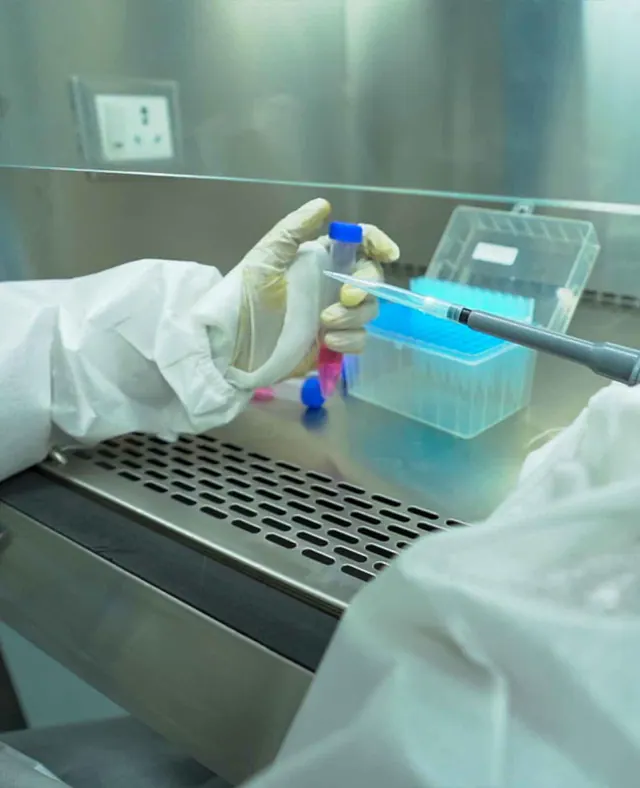
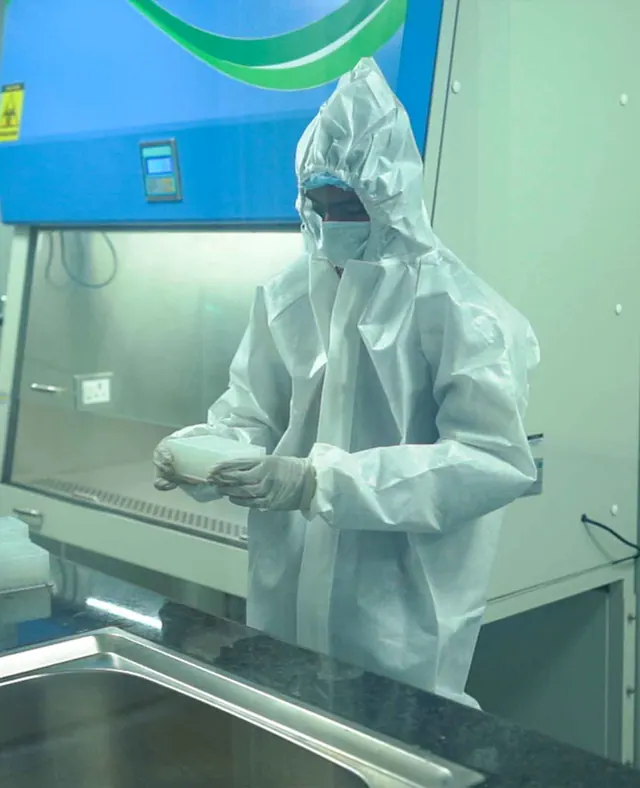
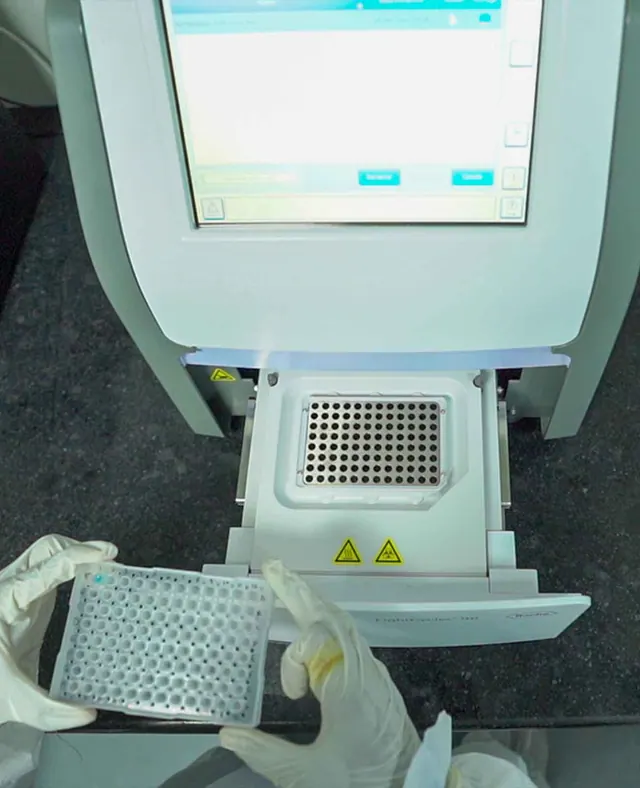
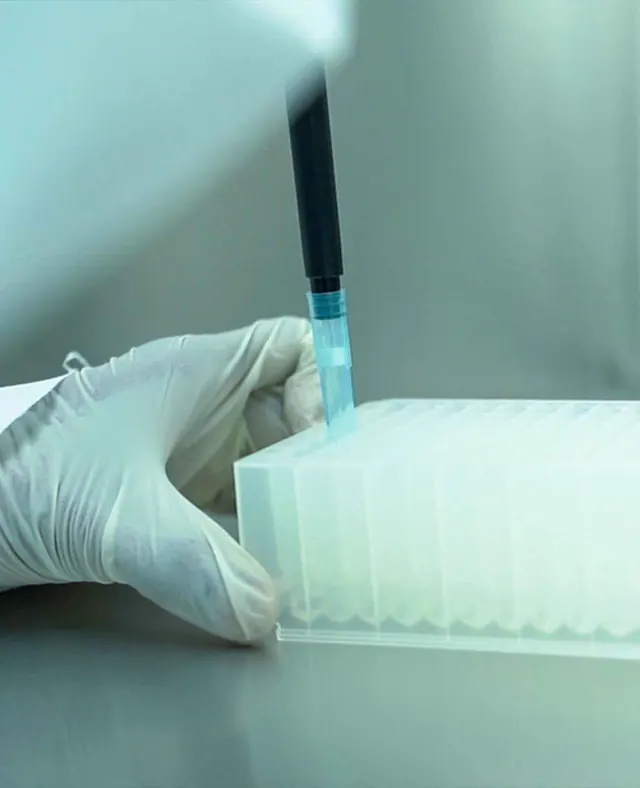
Design rules differ between countries and regions.
The local biosafety authority makes the final decision. These are the features common to BSL-3 practice:
Directional inward airflow. The laboratory is at negative pressure to the corridor, so air flows into the lab. Lab air is not recirculated, which means it is not sent back into the lab.
HEPA-filtered exhaust. This is typically at room level and always on the safety cabinet. The filter housings are arranged so the filters can be decontaminated and tested in place.
An anteroom or airlock with two sets of self-closing doors. The doors are interlocked, so one cannot open while the other is open, or they are controlled by a written procedure.
Sealed surfaces and penetrations. Penetrations are the openings where pipes and cables pass through walls. Sealing them lets the whole room be decontaminated with gas.
A biological safety cabinet for all open work with infectious material. It is used for every open step, including steps that are not judged to create aerosols.
An autoclave (a steam steriliser) for waste, preferably inside the containment envelope, the sealed area of the lab.
Effluent treatment (treatment of liquid waste) where the agents or the local authority require it.
Controlled access, alarms that sound if the airflow fails, and monitored pressure differentials between rooms.
A containment isolator uses the same pressure principle. The isolator applies it to a closed box.
A BSL-3 lab applies it to a whole room. The isolator guide explains positive and negative pressure in more detail.
Inside a BSL-3 suite, the equipment often adds containment isolators as a second layer on top of the room.
India's high-containment capacity grew substantially after 2020.
The growth came through the ICMR (Indian Council of Medical Research) network, state medical colleges and private research institutions. There is no single published register giving a current national count.
A figure you find online is usually out of date, or it counts something different. Some lists count only ICMR-funded labs.
Some include BSL-3 suites inside larger institutions. Some count mobile units.
Treat a number without a date and a source as unreliable.
The approval path does not vary. A BSL-3 facility in India works under the oversight of an institutional biosafety committee, together with the relevant national authorities.
The design must be agreed before construction starts. It is not enough to justify it after the lab is built.
Who builds them. BSL class III labs manufacturers in India fall into two groups.
The difference between them matters more than price. Some supply the containment envelope, the panels and the doors.
Others take on the whole facility. This means civil rework, air handling, services, containment and qualification, all following the approval path.
Fabtech is in the second group. This is why we could take on the Shahjahanpur project below, on a site with no power and no AHU.
If you are planning a BSL-3 lab, the limit is almost never the equipment. The limits are the space, the air handling capacity and the power.
The Shahjahanpur project below is an example of this.
BSL-4 is for agents with a high risk of aerosol transmission.
These agents cause life-threatening disease, and no vaccine or therapy exists for them. Examples are the Ebola, Marburg, Lassa and Nipah viruses.
BSL-4 adds a full-body positive-pressure suit or a Class III cabinet line. The suit has its own dedicated air supply.
Staff leave through a chemical shower. Everything leaving the containment area goes through effluent and waste treatment.
In India, BSL-4 capacity sits in a small number of national institutions. It is not spread out the way BSL-3 is.
Most organisations that ask about BSL-4 turn out to need BSL-3 with enhancements, meaning extra controls added to a BSL-3 lab. That takes much less time and money.
A modular BSL-3 laboratory is built from prefabricated wall, ceiling and service modules.
Prefabricated means the modules are made away from the site. They are then assembled on site, instead of being built in place.
The containment performance is not lower. What changes is the order of work.
The modules are made off site while the civil work happens on site. So both run at the same time, not one after the other.
This helps most in the situation Shahjahanpur had. An existing building had to be converted, and the site could not support a long programme of wet trades.
Wet trades are site work such as concrete, brick and plaster. A modular lab also makes a future change of use easier, because the panels can be taken apart.
The limit is that the module sizes must fit the access route into the building. So a site survey must check the access route before design starts.
For a containment lab that can be moved from place to place, see the mobile biocontainment laboratory.
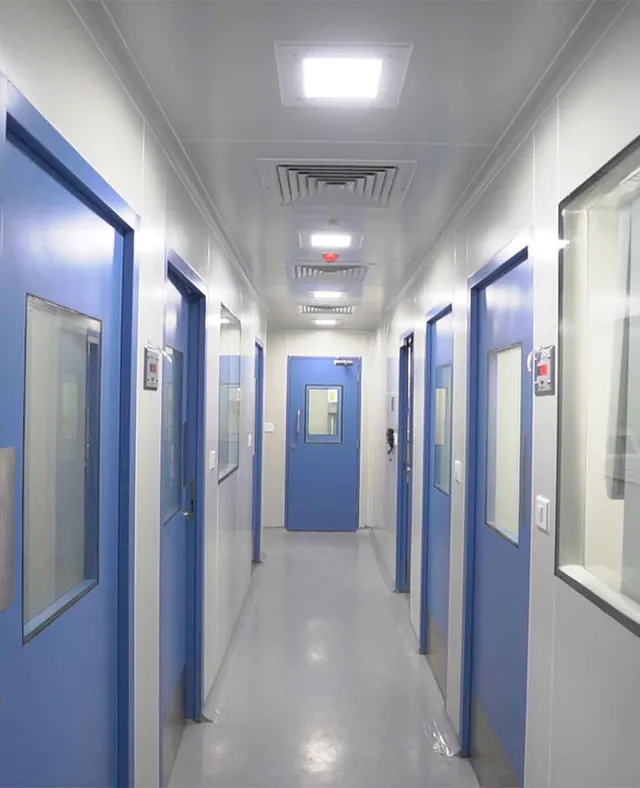
Fabtech won a competitive bid for a Government of Uttar Pradesh project at the Autonomous State Medical College in Shahjahanpur.
The project was a multi-purpose diagnostic and R&D centre. Its first use was Covid-19 testing.
The project started during India's second wave of Covid-19. Almost nothing on the site was ready for it.
The space was too small. The area allocated was 950 sqft, against an optimum of 1,500 sqft for a BSL-3 laboratory.
The area had been planned for a completely different use. So the passageway was narrow, there was no service area, and the doors were smaller than they needed to be.
The first task was to rework the civil work for the whole area. The aim was to make the best use of the space without weakening the BSL 3 lab environment.
There was no power. The main service station was 650 metres away.
Our team had to move cables and electrical panels across that distance during one of the strictest lockdowns in the world.
There was no AHU. The air handling unit moves and filters the air.
A BSL-3 facility needs it, because its whole containment strategy depends on airflow. The AHU was not in place when work began.
The team had to manage it on site while the project was running.
The lab was inaugurated by Hon'ble Shri Brijesh Pathak, Deputy Chief Minister, Government of Uttar Pradesh. It was the region's first BSL-3 facility.
The next one we are building is in Noida.
A high-containment laboratory for pathogens that can spread through the air and cause serious or lethal disease. It runs at negative pressure, so air flows in and not out. Its exhaust air is HEPA-filtered, and entry is controlled. This keeps the air itself contained.
Tuberculosis, SARS-CoV-2, yellow fever virus, West Nile virus, Q fever, brucellosis and tularaemia. All of them can infect a person who breathes them in.
It means the same as BSL-3 lab. Only the spacing and the hyphen change. It is a high-containment laboratory for pathogens that spread through the air.
Biosafety level. The scale goes from 1 to 4. The level depends on how infectious the agent is, how it spreads and how severe the disease is.
BSL-3 handles airborne agents for which treatment or vaccines generally exist. BSL-4 handles agents with no available vaccine or therapy. BSL-4 also adds positive-pressure suits or a Class III cabinet line, a chemical shower at the exit, and treatment of everything that leaves.
There is no single current public register. Counts differ because some include suites inside larger institutions or mobile units, and some do not. Capacity grew substantially after 2020 through the ICMR network and state medical colleges. Treat any figure without a date and a source with caution.
It depends on the level. At BSL-3 the work is typically diagnosis, culture and characterisation of airborne pathogens. It also includes research and vaccine work on them. The same organism can be BSL-2 for diagnostics and BSL-3 once it is cultured, because culturing creates aerosols.
There is no fixed number, but the optimum for a standalone BSL-3 lab is around 1,500 sqft. We delivered Shahjahanpur in 950 sqft by reworking the civil layout. This is possible, but it takes more design effort.
A lab built from prefabricated modules that are assembled on site, instead of being built in place. Containment performance is the same. The modules are made while the civil work goes on, not after it. This suits conversions of existing buildings and short schedules.
Often yes, and it is common. Four things decide it: air handling capacity, whether the room can be sealed, whether an anteroom can be formed, and access for services. A site survey answers this first. Design work is only worth doing after that.
Fabtech built the first laboratory of this level in its region, for the Government of Uttar Pradesh at the Autonomous State Medical College in Shahjahanpur, India. Its first use was Covid-19 testing.
Tell us the agents you work with, how many samples you handle and the space you have. We will work out the containment you need
We reply within 24 hours.