Pharmaceutical Turnkey Projects
Fabtech delivers pharmaceutical turnkey solutions: 760+ global projects in 65+ countries. A turnkey project puts the whole plant on one contract.
Without one contract, the cleanroom panels, the air system, the water system and the process line come from four vendors.
We reply within 24 hours.
Many trades build a pharmaceutical plant, and most problems start where the work of one trade meets the work of the next. When the plant is late, each vendor says the delay is another vendor's fault.
On a turnkey project, one team is answerable for the result.
We take pharma turnkey projects from the first question to the running facility. The work covers direction, design, equipment, technology transfer, project management and qualification.
We do this in export markets across Africa, the Middle East, South Asia and the Americas. You get a plant that you can operate and that is ready for an inspector to inspect.
On this page
Key fact Detail
- Global projects delivered
- 760+
- Countries
- 65+
- Steps in a Fabtech turnkey project
- 10
- The standard of the facilities we build
- GMP and WHO compliant
- A turnkey project in oral solid dosage, laboratory and sterile areas
- Lab & Allied, Kenya
One partner for the whole pharmaceutical plant
Fabtech designs, builds, equips, commissions and qualifies your manufacturing facility on a single contract.
Then we hand the facility over, ready to operate. This is what a pharmaceutical turnkey project means: one partner and one contract.
Commissioning means starting the plant and testing that it runs. Qualification means proving, in writing, that it works as designed.
The owner decides the product and the market. The partner is responsible for the delivery, the schedule and the compliance of the finished plant.
The name is literal: at handover, you turn the key and start production.
This is what end-to-end pharma project solutions means when a supplier uses the term honestly. One company signs for the whole plant.
It manages every point where one discipline's work connects to another's. It stays until the qualification documents are in your hands.
Turnkey pharmaceutical projects guide: turnkey, multi-vendor or design-bid-build
Most problems in building a pharmaceutical facility come from working with many vendors.
Four problems are common. Vendors do not talk and plan together well on timelines, specifications and expectations.
Equipment from different suppliers has to be integrated to work together. That is where the technical problems appear.
Quality standards change from vendor to vendor unless someone writes them down and enforces them. And negotiating a contract with each vendor takes months on its own.
There are three ways to buy a plant. In a turnkey project, one partner holds one contract.
In a multi-vendor project, the owner hires each vendor separately. In design-bid-build, the owner pays for a design first, then asks builders to bid to build it.
The table compares them. A change order is an extra charge for work that was not in the original contract.
| Turnkey (single contract) | Multi-vendor | Design-bid-build | |
|---|---|---|---|
| Who signs for the finished plant | One partner | Nobody. Each vendor signs only for its own scope | The builder, for what the design drawings show |
| When the price is known | At contract signing, for the issued-for-design package | Vendor by vendor, as each one is hired | After design, when the construction bids come in |
| Who pays for material cost increases | The single partner | The owner, through change orders | Usually the owner, through change orders |
| Design and construction | They overlap, so procurement (buying) starts while the design is being finished | One vendor after another | One after the other: design, then bid, then build |
| Who carries the risk of integration | The partner | The owner | In the gap between designer and builder |
| What the owner has to manage | One relationship | Every relationship | Two contracts and the gaps between them |
| What usually goes wrong | Choosing a partner without the right proof | Delays, rework and disputes between vendors | Cost overruns found at bid stage |
- The benefits of a turnkey contract follow from that table. The first is price certainty.
- The fixed sum covers everything in the issued-for-design package, which is the set of design documents the price is based on.
- The second is reduced management challenges. Inside one team, there are no gaps between engineering, design and construction that turn into change orders.
- The third is fewer cost overruns. The team that designs the plant also builds it, so it finds its own errors early.
- The fourth is condensed timelines. The project takes less time because design, procurement and construction overlap.
- The other benefits come from the people. You get a collaborative approach, because designers and builders share one interest and one contract.
- You get expertise and experience. A partner who has done this before finds problems that a first-time builder would miss.
- You get risk transfer, because the turnkey solutions provider assumes responsibility for the project's success and answers for schedule, cost and performance. The owner spends less effort on management.
- Quality stays consistent across all stages. The equipment is bought, installed and integrated as the plant is built.
- It is part of the plant from the start.
The ten steps to your plant
We support your whole bio-pharma manufacturing life cycle.
It starts with setting the direction and ends with taking your products to market. Our start-to-finish turnkey solutions keep risk low.
This matters most if you are entering a new country or region, or adding technology to expand your product portfolio. Our customer network lets us set up partnerships for greater impact, above all in regions that have little or no pharmaceutical capability.
The work starts with W2H: why, what and how. We work with you to define the why, the what and the how of the project.
This helps you decide whether the project is viable. When these questions are answered at the start, risk stays low for the whole project.
1. Disease profiling
What happensWe find opportunities using current research on specific and non-specific health patterns in the target countries
What you receiveA shortlist of therapeutic areas (groups of diseases), with the evidence behind it
2. Market mapping
What happensWe map the countries you could enter and the countries you hope to enter. We also map current and likely future competitors in the therapeutic area
What you receiveA market map you can take to your board
3. Go to market plan
What happensA detailed plan to deliver your products to the end customer. It covers the product portfolio, sales projections, capacity planning, break-even analysis and the steps to competitive advantage
What you receiveThe business case that sets the size of the plant
4. Technology tie-up
What happensWe find the right technology partner for your portfolio and help set up a strategic partnership with them
What you receiveA technology partner and the terms of the tie-up
5. Concept
What happensOur designers and engineers develop the concept. It covers how people and materials move, the cleanroom classification strategy, utilities and layout
What you receiveConcept design and the basis of design
6. Engineering
What happensOur own engineers do the engineering. Fabtech makes its own cleanroom panels (our manufacturing capability) and supplies the equipment through partner manufacturers, so everything fits together
What you receiveDetailed engineering, piping and instrumentation diagrams (P&IDs), equipment schedules
7. Tech transfer
What happensThrough our customer network we support dossier purchase, full-cycle technology transfer and stacked transfer models. They cover APIs (active pharmaceutical ingredients), finished formulations and packaging technology
What you receiveProcesses that are transferred, documented and ready to validate
8. Equipment supply
What happensWe are air, water and process experts. We supply containment solutions and process, water and clean-air equipment
What you receiveInstalled equipment from Solutions for Air, Solutions for Water and Solutions for Process
9. Project management
What happensOur implementation experts manage the site, the suppliers and the schedule
What you receiveA single point of contact, and a plant delivered on schedule
10. Audit, training, validation and certification
What happensDesign reviews at concept stage. Audits during engineering and site work. Operator training before qualification. Infrastructure support for your application for an EU GMP certificate (EU GMP is the European Union's good manufacturing practice rules). The competent authority issues the certificate after inspection
What you receiveA facility engineered to EU GMP, qualified and ready for inspection
When you work with us, you do not have to worry about anything on site. We are with you at every step, from the documents and audit training to being ready for the regulator.
What is in scope
Pharma turnkey solutions differ from company to company.
So the scope has to be written down before the price means anything. Fabtech's turnkey pharma plant setup covers the plant from design to qualification.
The civil and structural works are agreed project by project.
| Scope element | Included in a Fabtech turnkey pharmaceutical manufacturing plant |
|---|---|
| Facility design | Concept and detailed design, layout, flows, classification and pressure strategy, utilities design |
| Cleanroom and HVAC | Cleanroom systems, air handling, treated fresh air, containment and clean-air equipment |
| Water systems | Purified water, water for injection, pure steam, storage and distribution |
| Process equipment | Oral solid dosage lines, fill-finish, isolators, process vessels, CIP and SIP (cleaning and sterilising in place) |
| Technology transfer | Dossiers, process transfer, scale-up support |
| Project management | Schedule, procurement, site supervision, vendor coordination |
| Qualification | DQ, FAT, IQ, OQ and PQ support, training, audit readiness |
| Civil, structural, electrical | Scoped per project |
With pharmaceutical facility construction turnkey, the owner sees one schedule and one price. This is true whichever of these elements the contract includes.
The design stages, and the documents you receive at each one, are set out under pharmaceutical engineering services.
Plants we build
Pharmaceutical projects differ by what the plant makes.
A single-contract partner must have built each type of plant before. Each type has its own page under the industries we build for.
Oral solid dosage plants. Oral solid dosage (OSD) plants make tablets and capsules.
The steps are granulation, drying, blending, compression, coating and packing. With OSD facility turnkey engineering, we size the utilities to fit the production lines.
Fidson Healthcare in Nigeria planned six dosage lines in one plant. Fabtech's contract covered the cleanrooms, HVAC, utilities, high purity water and laboratory.
Read more about oral solid dosage facility design.
Injectable and sterile facilities. These plants have vial, ampoule and prefilled syringe lines, which depend on isolators, water for injection and pure steam.
Water for injection is very pure water for injectable medicines. An injectable plant turnkey project is where sterile manufacturing turnkey solutions are tested hardest.
The utilities and the classified areas (cleanrooms with a set cleanliness class) are qualified together. Fabtech's turnkey project for Lab & Allied in Kenya covered the oral solid dosage, laboratory and sterile areas.
Read more about sterile facility design and construction.
Biotech and biopharmaceutical facilities. These are vaccine and biologics plants.
Turnkey biopharmaceutical facilities need larger water and steam capacities and tighter endotoxin control. Endotoxins are toxins from bacteria that must be kept out of the product.
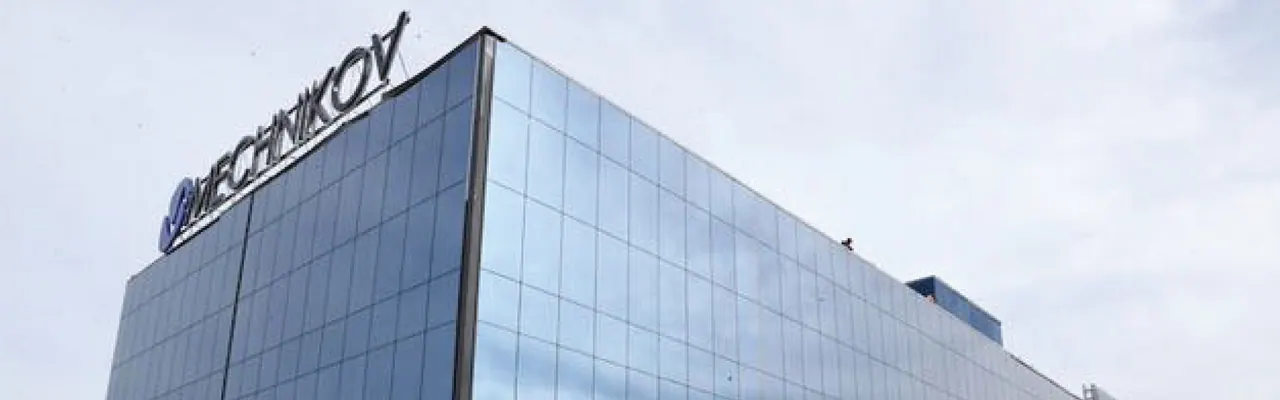
The Mechnikov vaccine facility in Nicaragua, about 9,000 square metres, was built this way. Biopharma facility turnkey solutions and biotech turnkey consulting start with the process.
The plant comes second. For the planning detail, read our guide to the key considerations for a successful pharmaceutical turnkey project.
API and chemical synthesis. These plants need reactor charging, containment isolators, and the water and cleaning systems that the chemistry needs.
One example is the Umicore isolator project in Argentina.
Labs and BSL-3. We build biosafety level 3 (BSL-3) labs, such as the one in Shahjahanpur.
We deliver them with the same care for the paperwork.
Medical devices and medtech. Turnkey projects for medical devices use the same cleanroom, water and qualification scope.
A GMP manufacturing partner for medtech is judged on the documents as much as the building.
Your site may be greenfield (new, empty land) or an extension of a running plant. This changes the order of the work.
The scope stays the same. Our explainer on greenfield and brownfield projects covers the difference.
Where we have delivered
A global pharma turnkey company is judged by the plants that are running.
Fabtech has delivered 760+ global projects in 65+ countries. They include Nigeria, Saudi Arabia, Egypt, Algeria, Kenya, Tanzania, Ethiopia, the UAE, Bangladesh, Sri Lanka, Nicaragua, Argentina and the USA.
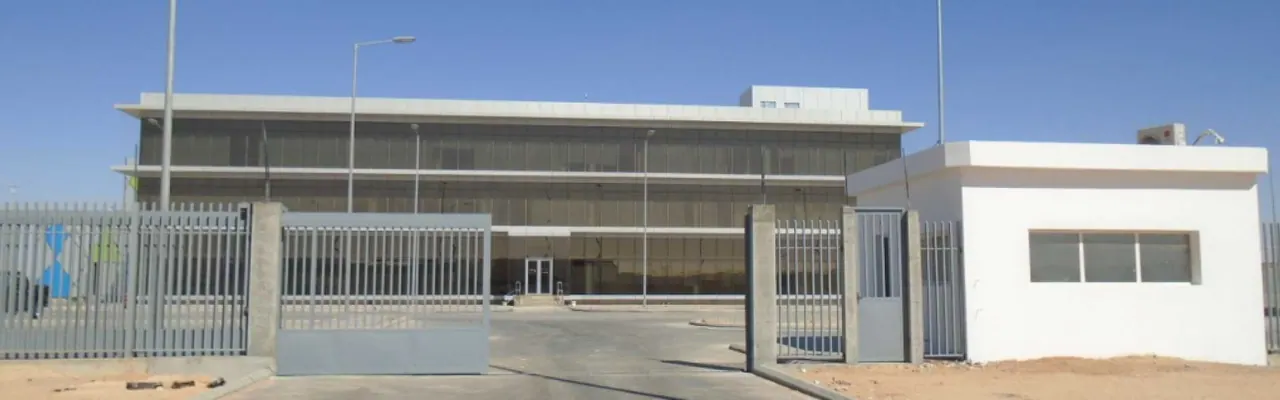
Each project has its own scope. At Madinat Al-Dawaa in Saudi Arabia, the scope covered cleanroom panels, flooring, HVAC and the building management system.
It also covered the generation and distribution of purified water and water for injection, pure steam, compressed air, nitrogen, the boiler, electrical work and fire fighting. For CPCM in Algeria, Fabtech delivered a cleanroom equipment turnkey project.
It had 2,712 square metres of modular panels, HVAC, electrical work, epoxy flooring, utility piping and a fire hydrant system.
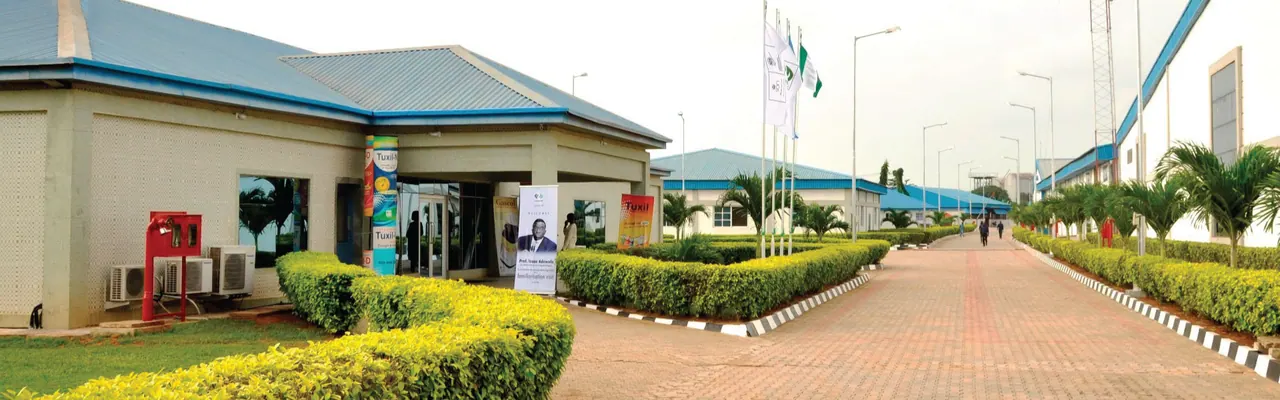
Several of them have detailed case studies. They include the Fidson turnkey pharmaceutical project in Nigeria, the Mechnikov vaccine facility in Nicaragua and Sudair Pharma in Saudi Arabia, an oncology facility.
The full list of pharmaceutical construction projects and installations is on our projects page. You can also read our work by region: Fabtech projects in the Middle East and Fabtech projects in Africa.
For Geltec Pharmacare in Dubai, the scope was 12,869 square metres of modular cleanroom panels, with HVAC and electrical work. For Amneal in the USA, Fabtech supplied 21,648 square metres of panels, 14,439 square metres of ceilings and 388 doors.
At Burjeel Hospital in the UAE, Fabtech designed and built the operation theatres. In Sri Lanka, our clients include Navesta Pharmaceuticals and Synergy Pharmaceutical Corporation.
In Bangladesh, they include Incepta, Essential Drugs (EDCL), Healthcare Pharmaceuticals, Navana and Colgate-Palmolive ACI.
Owners often look for pharma turnkey project consultants in India at the very start. At that stage, the owner does not yet know whether a plant is viable at all.
The first four steps above are for this stage. You can talk to us before you have a brief.
Our contact page reaches the engineers directly.
Standards and regulatory readiness
GMP compliant turnkey solutions in pharma are only compliant if the paperwork proves it.
GMP means good manufacturing practice: the rules that regulators check when they inspect a medicine plant.
Fabtech builds GMP and WHO compliant facilities. Every Fabtech plant is engineered to EU GMP and cGMP.
The equipment and systems are designed to withstand inspection under USFDA (United States), MHRA (United Kingdom) and TGA (Australia). Where electronic records are used, process equipment controls are designed for 21 CFR Part 11, the US rule for electronic records.
Water systems follow ASME BPE and ISPE guidance.
The proof starts with the design review (DQ). Next comes the factory acceptance test (FAT), done before the equipment ships.
Then come the checks on the installed plant (IQ) and the operating plant (OQ). The last step is the performance run (PQ).
We write the documents for the inspector who will read them.
Why Fabtech
One partner, one team.
Fabtech is a pharmaceutical turnkey project supplier, an equipment supplier and pharma turnkey engineering consultants in one company. So the connections between the systems are designed once.
Equipment from the same company.
Solutions for Air, Solutions for Water and Solutions for Process are Fabtech Technologies ranges. Fabtech designs and supplies them with the plant, and makes its own cleanroom panels.
That is why they fit the plant they were designed for. Pharmaceutical engineering, process technologies and the plant that houses them come from one company, not four.
People.
Our designers and engineers develop the concept and the detailed design. Our site experts have built plants in places with no pharma capacity at all.
Proof.
The projects named on this page are plants and facilities that Fabtech delivered. You can read our case studies.
When a project is finished.
We consider a project finished when it reaches the beneficiaries and makes a real difference to their health and community. Every plant we build affects thousands of lives.
We make sure each plant does its job for those people.
FAQ
What are the benefits of turnkey projects for pharmaceutical companies?
You get one contract and one accountable partner. This gives price certainty and fewer change orders. The schedule is shorter because design and procurement overlap. Every discipline works to the same quality standard. The equipment is integrated into the plant as it is built. The owner manages one relationship instead of a dozen.
What role does regulatory compliance play in turnkey pharmaceutical projects?
Compliance is built into every stage. Design reviews check the concept against GMP. Engineering audits check the drawings. Qualification proves that the installed plant works. Because compliance is handled as one scope, no vendor can say that its responsibility for compliance stopped at the edge of its own work.
Are turnkey initiatives appropriate for startups in the pharmaceutical industry?
Yes, often more than for large companies. A startup gets a faster, compliant plant for a fixed sum. It follows pharma best practice from day one. It does not need to build its own engineering team to manage vendors. Steps 1 to 4 also test whether the plant should be built at all.
Can Fabtech's turnkey projects be customised to specific needs?
Yes. Every project starts from the product, the market and the site, so no two plants are alike. Fabtech has delivered 760+ global projects in 65+ countries, and each one has its own size and layout. Fabtech delivers end-to-end pharma solutions that match industry standards and the owner's expectations.
Who are the leading pharmaceutical turnkey project consultants in India?
Judge any consultant by three things: named plants that are running, equipment they supply and answer for, and qualification documents they wrote. Fabtech's projects and case studies are listed above. The air, water and process pages show what we supply. Ask every consultant for the same evidence.
What is meant by a turnkey solution in pharma?
It is a single contract. One partner designs, builds, equips, commissions and qualifies the facility, then hands it over ready to operate. The owner turns the key. The opposite is hiring a designer, a builder and each equipment vendor separately.
How long does a turnkey pharmaceutical manufacturing plant take?
It depends on the dosage form, the site and the approvals. So we give a schedule for your project with the proposal. We do not quote a general figure. Under one contract, design, buying and building overlap. This makes the project shorter than a step-by-step multi-vendor build.
Do you handle pharma turnkey project management and the vendor coordination?
Yes. Step 9 is project management. It covers the schedule, procurement, site supervision and coordination of every supplier. The owner has a single point of contact. Pharma turnkey consultancy services are the direction and concept stages of the same contract, steps 1 to 5.
Can you recommend companies that offer complete processing systems with design and installation services for pharmaceutical manufacturing?
Look for a company that designs the process, supplies the systems, installs them and writes the qualification. Fabtech does all four for OSD, fill-finish, water and clean-air systems. A hospital pharmacy or compounding unit asking for turnkey pharmacy solutions would need that scope confirmed against its own licence first.
Which pharmaceutical technology solutions are included?
The process technology comes through technology tie-ups and technology transfer (steps 4 and 7). The equipment comes from Fabtech's own air, water and process ranges. Pharmaceutical manufacturing solutions for OSD, injectables, biotech and API are each described above.
Tell us what you want to make and where, and we will plan the scope of the plant
There is no obligation.
The engineers who would build the plant send you a first view of it, the utilities it needs and the schedule.
We reply within 24 hours.