Greenfield project
In a greenfield project, the hard part is getting the design right. Nothing on the site limits the design, and nothing corrects a mistake in size.
Fabtech offers specialised engineering for greenfield and brownfield projects. Our record is 760+ global projects in 65+ countries.
Our pharmaceutical engineering projects are all different, so we adapt our approach to each one.
We reply within 24 hours.
We build new plants, and we upgrade plants that already exist. Each type of project has its own needs.
We plan the work for those needs. A few core principles stay the same in both types of project.
The approach and the way we carry out the work change a lot. Both types need precision, new ideas and deep technical skill, but in different ways.
Fabtech knows these differences and adapts to them. This is our strength.
Key fact Detail
A greenfield project builds a facility on an unused site.
There is no existing building or process to work around. A brownfield project expands, upgrades or repurposes a plant that already exists.
Usually the plant keeps producing while the work goes on. So the meaning of greenfield and brownfield projects is simple.
It is about what is already on the site. Every other difference follows from that.
In the pharmaceutical industry, this choice decides the engineering as much as the capex (the money spent to build). A greenfield project sets its own layout, its own utility routes and its own cleanroom classifications.
A cleanroom classification is the clean grade of a room. A brownfield project inherits all three.
It must also prove that the new work has not disturbed any area that was qualified before. Qualified means tested, with written proof that it works as it should.
The difference between greenfield and brownfield projects is not how hard they are. It is where the hard part is.
In a greenfield project, the hard part is getting the design right. Nothing on the site limits the design, and nothing corrects a mistake in size.
In a brownfield project, the hard part is the order of the work. The plant has to keep making product while it changes.
| Greenfield project | Brownfield project | |
|---|---|---|
| The site | Unused land | A running facility |
| Layout is set by | The process | The existing building |
| Cleanroom class | Chosen for the product | Inherited, often reclassified |
| Utilities | Sized with spare capacity | Measured for what they can still carry |
| Construction | Continuous | Phased, around live production |
| Main risk | Building the wrong size | Disturbing a qualified or live area |
| Proof at handover | The facility performs | The facility performs, and everything untouched still does |
| Schedule driver | Permits and approvals | Available shutdown windows |
These words are also used in industrial construction in general. An industrial brown field construction company has the same problem of ordering the work on any live site.
In pharmaceutical manufacturing, one thing is different. The areas next to the work are qualified.
The project has to keep them that way.
Greenfield projects let us design and build a new plant on an empty site.
We have full control over the layout, where the utilities go and how the work flows. We can also use the latest technology.
Fabtech uses this freedom to build advanced plants. We design them to be ready for future needs and to meet the rules of regulators to a high standard.
Our work starts with a full site evaluation and a feasibility study. This study checks if the plant can be built on the site as planned.
We check the environment: air and water quality, possible noise pollution and the effect on nature. We also make sure the plan follows zoning laws, building codes and other rules.
We check these points in detail too: access routes, how materials move, and storage space.
Fabtech manages the whole life of the project. Our turnkey scope covers basic and detailed design, procurement, construction, installation, validation and handover.
Turnkey means one company delivers the plant ready to use. We make sure all systems are ready to run before we hand the plant over.
The full sequence is on pharmaceutical turnkey projects.
A new plant needs permits and approvals from several government bodies. This is a critical step.
Fabtech builds global standards into the plant design from the first day. These include cGMP (current Good Manufacturing Practice) and good manufacturing practices guidelines for pharmaceuticals.
They also include the guidelines of the USFDA (United States), EMA (European Union) and WHO. We handle the permits and approvals with precision.
Read more: all about Good Manufacturing Practices (GMP) guidelines for pharmaceuticals.
We design greenfield projects with room to grow later. We use modular layouts.
These let the plant grow, stay sustainable and adapt to new technology and new rules. We use sustainable materials too, and we plan for possible future effects, such as climate change.
On an empty site, we are free to plan the best flow of materials and people. We can also plan the best HVAC (heating, ventilation and air conditioning) zoning, modular cleanroom systems, energy-efficient utilities and use of renewable energy.
These systems work together. They make the plant highly efficient and productive, and they help it run very well.
The result is a high-performance, GMP-compliant plant that is ready for future demands.
Brownfield projects change a plant that already exists.
The work expands or upgrades the plant while pharma production goes on. The aim is to disturb production as little as possible.
Fabtech works within the limits of the plant as it runs today. We work with precision and flexibility.
We also know today's rules and technical standards in depth.
Unlike a greenfield project, brownfield work starts with a detailed audit and assessment of the existing plant. An as-built survey records the plant as it is built today.
Brownfield projects often have to work around limits that are already there. Examples are small spaces, fixed cleanroom classes and old HVAC systems.
Fabtech checks the current layout and whether the building structure is sound. We also check process bottlenecks, utility capacity and any points where the plant does not meet the rules.
A bottleneck is a step that slows the whole process. From what we find, we decide what to keep, what to reuse for a new purpose and what to replace.
This keeps the plant running with as little disruption as possible.
Retrofitting means fitting new systems into an old plant. Retrofitting to meet the rules of regulators is one of our main strengths.
Fabtech helps clients bring old plants up to current GMP and international standards. We redesign the plant with care, reclassify cleanrooms, upgrade HVAC systems and improve automation.
To reclassify a room means to give it a new clean grade.
Fabtech builds in careful phases, so the plant stops for as short a time as possible. We work during off-hours or planned shutdowns.
This way, new systems can be integrated without halting existing processes. Working in phases also keeps people safe.
It prevents cross-contamination in sterile and high-potency areas, where any breach could harm the product. Cross-contamination is when one product gets into another.
High-potency medicines are active at very small doses.
New equipment has to fit into the plant that is already there, so it needs careful planning. The plan must allow for space, utilities and the way people move.
Fabtech handles equipment retrofitting, custom utility piping, electrical load balancing and changes to the process layout. This work needs engineering knowledge.
It also needs close work with the client's production and quality teams.
Some units arrive as a modular skid, which is equipment built in advance on one frame. For these, the same assessment decides what the skid can connect to.
How brownfield integration works for modular units depends on the existing utility headroom and the available route. Utility headroom is the spare capacity left in the utilities.
The as-built survey gives this answer. The module's datasheet does not show it.
Fabtech keeps the running plant safe during building work and system upgrades. We use cleanroom containment solutions, process segmentation and sterility testing isolators.
Process segmentation means keeping each process apart. Brownfield projects can bring special problems for maintenance and daily running.
So we also plan maintenance and training. We also plan lifecycle management, which is care of the plant over its whole life.
This keeps the plant ready for the future.
Older plants often fall behind current standards. Our upgrades include contamination control and separate paths for materials and people.
They also include automated systems with data integrity. Data integrity means records are complete, correct and safe from change.
These upgrades turn old plants into efficient plants that meet global standards.
A biotech brownfield expansion is one of the harder types of this work.
The main limit is rarely floor area. A biologics suite makes medicines from living cells.
When it adds capacity, it usually adds bioreactor volume, buffer preparation or a second downstream train. A downstream train is the line of equipment that purifies the product.
All of this goes into a building that was sized for the first line.
The first thing to run out is utility headroom: chilled water, purified water, clean steam and the air handling. The air handling has to hold the pressure cascade while a wall is open.
A pressure cascade keeps the cleaner rooms at a higher air pressure than the rooms around them.
So a brownfield upgrade for biotech or biopharma starts in the same way as every brownfield project, with the as-built survey. The survey measures capacity before it measures space.
What the plant can still carry decides whether the expansion takes one phase or three.
Where the plant cannot carry the load, the utility is uprated first and the process equipment follows. To uprate a utility means to increase its capacity.
That is why purified water and WFI systems and clean-air systems would typically be the first packages in a biopharma brownfield programme. WFI (water for injection) is the purest water grade.
It is used to make injectable medicines.
The other difference is the qualification burden. An expansion has to prove two things: the new suite performs, and the areas around it still perform.
So the qualification file covers more of the plant than the work did. For a new plant of this kind, see turnkey biopharmaceutical facilities.
Greenfield and brownfield projects are different, but they share a few basic principles.
On every project, Fabtech works closely with the client from start to end. This starts with the user requirement specification (URS) and risk analysis, and runs to validation and handover.
The URS is the document that states what the client needs the plant to do. Working this way makes sure the plant design fits the client's process, its market and what its regulators expect.
Both types of project need many kinds of engineers to work together: civil, mechanical, electrical, automation and process. Fabtech has its own in-house team, with people from many fields.
The team makes decisions together and solves problems quickly.
How a plant uses energy and water, and how much waste it makes, matter more and more. Fabtech uses sustainable practices in both greenfield and brownfield projects.
We offer heat recovery systems, clean air solutions such as air handling units, and purified water distribution systems. Heat recovery systems reuse heat that would be lost.
In a new build or an upgrade, Fabtech plans for validation from the start. Validation is the written proof that the plant does what it should.
DQ, IQ, OQ, and PQ protocols are built into the project plan. These are the four qualification stages: design, installation, operation and performance.
This makes the audit by regulators go smoothly.
Fabtech has done greenfield and brownfield projects in different countries.
They are part of our record of 760+ global projects in 65+ countries. They also cover different therapeutic areas, which are the types of disease a medicine treats.
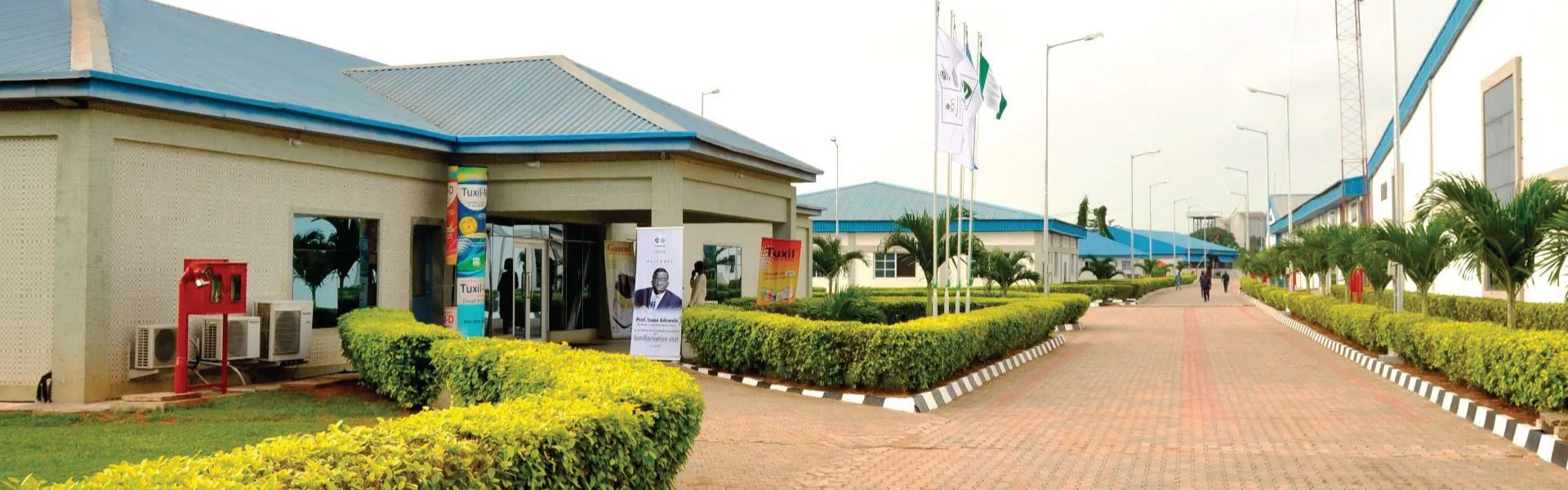
Greenfield. We have set up new oncology and vaccine manufacturing units.
Oncology medicines treat cancer. These projects often had tight deadlines and strict checks by regulators.
The oncology facility is Sudair Pharma in Saudi Arabia. The vaccine manufacturing facility is Mechnikov in Nicaragua.
Fidson Healthcare in Nigeria planned six dosage lines in one plant. Fabtech's contract covered the cleanrooms, HVAC, utilities, high purity water and laboratory.
See all our projects in Africa.
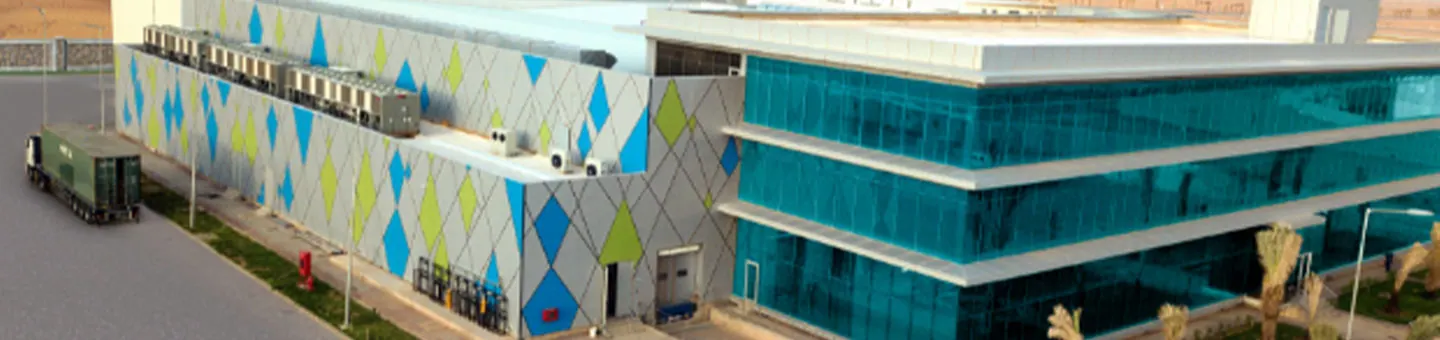
Brownfield. We upgrade sterile production blocks in existing pharma plants without affecting daily output.
We do this especially in highly regulated markets in the Middle East and South Asia.
The Middle East project we can name is Sudair Pharma in Saudi Arabia. See all our pharmaceutical projects in the Middle East.
Our clients in Sri Lanka include Navesta Pharmaceuticals and Synergy Pharmaceutical Corporation. Our clients in Bangladesh include Incepta Pharma, Essential Drugs (EDCL), Healthcare Pharmaceuticals, Navana Pharmaceutical and Colgate-Palmolive ACI Bangladesh.
Fabtech is a global player in turnkey pharmaceutical projects. We handle both greenfield and brownfield projects, and we plan each one for its own needs.
We bring strategic thinking, technical skill and excellent project work. The starting point may be an empty site or an existing plant.
In both cases, the finished project is always built to the highest standard. We build and upgrade structures, and we also build capabilities.
Every plant we have built is listed on pharmaceutical manufacturing facility projects. How to plan a plant is explained in the key considerations guide.
A greenfield project builds a facility on an unused site, with no existing building or process. The layout, the utility routes and the cleanroom classifications are all chosen for the product. So the main task is to get the design right.
A brownfield project expands, upgrades or repurposes a plant that already exists. Usually the plant keeps producing during the work. The building, the utilities and the existing cleanroom classes are inherited. So the work is planned around live production. The project must also prove that nothing already qualified was disturbed.
The answer is what is already on the site. A greenfield project designs the layout from the process. A brownfield project fits the process into an existing building. The greenfield risk is building the wrong size. The brownfield risk is disturbing a qualified or live area. Permits and approvals set a greenfield schedule. Available shutdown windows set a brownfield one.
Neither is better in general. Brownfield usually reaches a first batch faster, if the existing utilities can still carry the load. Greenfield is the right choice when they cannot. It is also right when the cleanroom classes are wrong for the product, or when the forecast needs more room than the site has. The as-built survey decides.
The limit is usually utility headroom, not floor area. Adding bioreactor volume, buffer preparation or a second downstream train needs chilled water, purified water, clean steam and air handling that can still hold the pressure cascade. Capacity is measured before space, and the utility packages would typically run first.
That is the purpose of the phasing. Fabtech plans the work into off-hours and planned shutdowns. This way, new systems are integrated without halting existing processes. Segregation and containment stay in place to prevent cross-contamination in sterile and high-potency areas.
The same qualification sequence applies as on any project. The difference is that the file must cover more of the plant than the work did. It must show that the new suite performs. It must also show that the areas around it still perform.
Our record is 760+ global projects in 65+ countries. Sudair Pharma in Saudi Arabia is an oncology facility. Mechnikov in Nicaragua is a vaccine manufacturing facility. Our clients in South Asia are in Sri Lanka and Bangladesh.
Contact us for end-to-end solutions for your next project
We reply within 24 hours.