Pure Steam Generation & Distribution

Fabtech supplies pure steam generators and their distribution systems, and one combined unit can make both water for injection (WFI) and pure steam. A pharmaceutical plant uses pure steam to sterilise the parts it cannot put in an autoclave.

We reply within 24 hours.

The parts are the vessels, the piping, the filters and the filling machine parts. If the steam carries boiler chemicals or rust, it leaves them on product-contact surfaces, the surfaces that touch the medicine.

Pure steam is made to prevent this.

The distribution system carries the steam to every sterilisation point. Each generator comes on a skid, a steel frame that holds the whole unit.

We supply the steam-quality tests and the documents that qualify the system, which means they prove it works as specified. The generator can stand alone.

It can also share a skid with the plant's WFI still. WFI is the water grade used to make injectable medicines.

Key fact Detail

What one combined unit can make
WFI and pure steam
Grade of the field piping
ASME BPE, fully drainable
Finish inside the generator and the piping
Electropolished
Documents that support your validation
DQ, FAT, IQ and OQ
Regulations the systems meet
USFDA, WHO and MHRA

Pure steam generators for pharmaceutical sterilisation

Each Fabtech generator comes with electropolished internals and fully drainable ASME BPE field piping.

Pure steam is steam made from purified water in a stainless steel generator. When it cools, it turns back into water, called condensate, and this condensate would meet the water for injection monograph, the official quality standard for WFI.

Pure steam carries no boiler treatment chemicals and no corrosion products. So it can touch product-contact surfaces and the air in clean areas.

Steam type

Pure steam (Fabtech standard)

Made from
Purified water, electropolished generator
Chemicals
None
Where it may go
Sterilisation in place of product-contact equipment, filters, filling lines; humidification of cleanroom air
Qualified?
Yes: DQ, FAT, IQ, OQ and steam-quality tests

Clean steam

Made from
Usually a synonym for pure steam; where distinguished, deionised or purified water in a stainless generator
Chemicals
None
Where it may go
Sterilising equipment where the condensate quality is controlled
Qualified?
Usually

Clean steam is often another name for the same thing. Some people do treat the two as different.

Then clean steam may be made from deionised water (water with its dissolved salts removed) and qualified less strictly.

Plant (utility, black) steam

Made from
Softened or raw water in a boiler
Chemicals
Yes, boiler treatment
Where it may go
Jackets, heat exchangers, HVAC coils; never product contact
Qualified?
No

Plant steam is also called black steam or utility steam. It is made in an ordinary boiler that uses treatment chemicals.

It heats jackets and heat exchangers. It must never touch the product side.

This is why a pure steam generator is a separate, qualified piece of equipment.

What Fabtech's pure steam generator delivers

Fabtech's Pure Steam Generator is designed to deliver sterile pure steam at various capacities and pressures.

It is designed so that the condensate meets the pyrogen (endotoxin) limit for water for injection. A pyrogen is a substance that causes fever if it gets into the blood.

The steam is used to sterilise equipment components such as tanks, preparation vessels, piping systems, filling machines, filters and garments. It is also used to humidify the air in cleanrooms, which means adding moisture to it.

The input to the pure steam generator is purified water (PW).

The generator and its distribution are designed to the same references as the plant's water systems. These are ASME BPE (the ASME standard for bioprocessing equipment) for fabrication, and ISPE and cGMP (current Good Manufacturing Practice) guidance.

The documents are prepared to pass USFDA (United States), WHO and MHRA (United Kingdom) inspection.

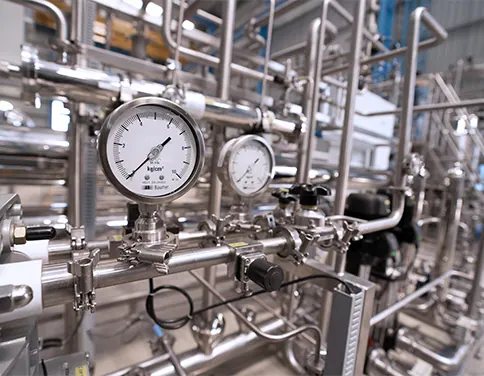
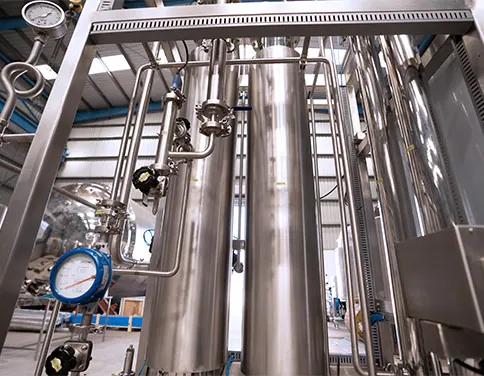
  • Looking up the column of a pure steam generator, with its gauge and sanitary valves
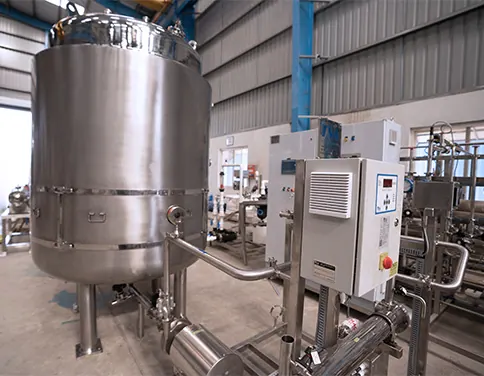
  • A stainless steel vessel beside its control panel
  • Pressure gauges and sanitary piping on a pure steam system

What you get Detail

  • Steam quality Removal of non-condensable gases; designed to meet the EN 285 steam-quality tests for dryness, superheat and non-condensable gases
  • Energy Energy-saving design; heat recovery on the blowdown and feed
  • Configuration Customisable capacity and pressure; standard skids for optimum performance
  • Combi option Combined, space-saving unit that makes WFI and pure steam from one skid
  • Automation Automatic or semi-automatic variants with 21 CFR Part 11 compliant SCADA (the computer control system, which keeps electronic records to the US FDA rule)
  • Fabrication Electropolished generators and distribution piping internals; high quality orbital welding with boroscopy and videoscopy
  • Distribution ASME BPE grade field piping with insulation, fully drainable, integrated with zero dead leg valves, instruments and pendants
  • Documentation Design qualification, FAT (factory acceptance test) protocols, IQ and OQ (installation and operational qualification) protocols and reports to support your validation

How a pure steam generator works

Purified water flows into a stainless steel evaporator.

Plant steam heats the evaporator from the other side of a tube bundle, a set of tubes. The purified water boils, and the vapour rises through a separator.

The separator removes any droplets that carry dissolved solids or endotoxin.

Non-condensable gases are gases such as air and carbon dioxide. They do not turn to liquid when the steam cools.

In a steriliser they would form cold pockets, so the generator vents them before the steam leaves. What comes out is dry, saturated pure steam at the pressure the plant needs.

Saturated steam is steam at its boiling temperature for that pressure.

As a process flow diagram in one line: purified water in, evaporator, separator, non-condensable gas vent, dry pure steam out to the distribution header. The distribution header is the main pipe of the distribution system.

The pure steam generation process is therefore a single-effect distillation. The water is boiled once, and the product is taken as vapour instead of condensate.

The working principle is the same as the first column of a WFI still. This is why a combined unit can take pure steam from the first still outlet of the WFI generator.

Three parts of the design decide steam quality: the separator, the level control that prevents carry-over, and the gas venting. Carry-over means water droplets passing out with the steam.
Steam quality: the three tests an inspector will ask about

A pure steam generator is accepted on the quality of its steam, rather than on the figures on its nameplate.

Most inspectors use EN 285, the European steriliser standard, as the reference. Its three steam-quality tests were written for the steriliser.

The same acceptance values are used to test steam quality at the points of use, the places where the steam is used.

Test

Dryness value

What it measures
How much of the steam is vapour rather than entrained water
Why it matters
Wet steam sterilises poorly and wets loads and filters
Typical acceptance
0.95 or above for metal loads, 0.90 for textiles

Superheat

What it measures
How far the steam temperature exceeds saturation at its pressure
Why it matters
Superheated steam behaves like hot air and does not condense to sterilise
Typical acceptance
Not more than 25 K after expansion

Non-condensable gases

What it measures
The volume of air and other gases carried in the steam
Why it matters
Gas pockets shield surfaces from steam and leave cold spots
Typical acceptance
Not more than 3.5 percent by volume

The generator, the separator and the venting are designed to pass these tests. The FAT and OQ include them.

Before you accept any pure steam generator, ask for the test method in the protocol.

Design of pure steam generation and distribution systems

The generator is only the source of the steam.

Design of pure steam generation and distribution systems means sizing the pipework, the traps and the drains. The aim is for dry steam to reach every point of use, and for the condensate to drain away without pooling.

Fabtech designs the distribution as sloped, insulated, fully drainable stainless steel piping to ASME BPE. Steam traps sit at every low point.

A steam trap is a valve that lets condensate out and keeps steam in. Zero dead leg valves sit at the use points.

A dead leg is a closed branch of pipe where water can stand still.

The design marks the sterilisation points on the vessels, filters and filling lines. The piping then serves them in the right order.

If a use point needs a different pressure, we include a sanitary pressure-reducing station. The steam samplers for the quality tests are part of the design from the start.

Configurations and capacities

We supply the same generator design in several forms.

It ranges from a compact unit for a pilot plant to an industrial pure steam generator for a multi-line sterile block. It is also supplied as an OEM module for other integrators.

An OEM module is a factory-built unit that another company fits into its own system.

Configuration Where it fits

  • Compact pure steam generator

    Small sterile suites, pilot plants, laboratories

  • Standard skid, automatic

    Most injectable and biologics plants; SCADA-controlled, 21 CFR Part 11 where required

  • High-capacity pure steam generator

    Typically specified for multi-line sterile blocks and large biologics facilities

  • Modular or OEM supply

    Delivered to another skid builder, integrator or commercial equipment supplier as a factory-built module

  • Combi WFI and pure steam unit

    Plants that want both utilities from one qualified skid

Capacity is stated in kilograms of steam per hour, and the delivery pressure in bar. Both are set by the largest sterilisation load that must run at the same time.

We size the generator from the sterilisation schedule, the list of what is sterilised and when. We do not size it from the largest vessel alone.

Installation, qualification and handover

Steam quality is proven at the points of use rather than at the generator flange, where the steam leaves the unit.

So the same team that supplies the generator also installs and documents the distribution.

Fabtech runs the dryness, superheat and non-condensable gas tests with your team as part of the qualification. If pure steam and WFI share a skid, we qualify the two together.

If they do not, we qualify the pure steam system on its own.

Stage Deliverable

  1. Design

    User requirement review, sterilisation load schedule, piping and instrumentation diagram (P&ID), distribution layout, design qualification

  2. Factory

    Skid build, factory acceptance test protocol and report, including steam-quality tests where the factory utilities allow; a pure steam generator datasheet in PDF for your project file

  3. Site

    Installation, weld logs and boroscopy records, passivation, slope and trap verification

  4. Qualification

    IQ, OQ and PQ (installation, operational and performance qualification): protocols and reports, with steam-quality tests at the points of use

  5. Handover

    Operating procedures, training, the complete dossier

For the inspection side, read our guide to validating high purity water systems. The same rules apply to steam.

When the generator is part of a new sterile block, we deliver it as part of the turnkey pharmaceutical project.

Why buy from the manufacturer

The difference between clean steam generator manufacturers becomes clear on test day.

Some suppliers can run a dryness, superheat and non-condensable gas test at the point of use and explain the result. Others can only quote a nameplate.

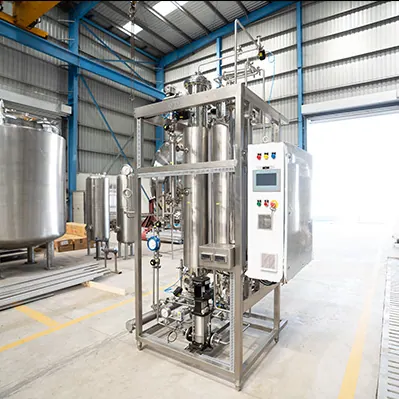
A pure steam generator on its skid: the tall columns, their piping and the control panel

Buyers who search for a pure steam generator manufacturer and supplier are looking for one company that takes responsibility for the system. Fabtech designs and supplies it and stays responsible for it.

We are also the installer and the qualification partner, and the steam-quality tests are in our own protocols. The same team supplies the WFI generation systems that can share the skid.

It also supplies the purified water systems that feed the generator. The full range is on our solutions for water page.

Fabtech delivers pure steam systems as part of turnkey projects for sterile plants in international markets.

FAQ

What is the difference between pure steam and plant steam?

Plant steam is made in a boiler that uses treatment chemicals. It is used only to heat jackets and coils. Pure steam is made from purified water in a stainless steel generator and carries no chemicals. It can be used to sterilise product-contact equipment and to humidify cleanroom air.

What is a pure steam generator used for?

It sterilises the vessels, piping, filters and filling machine parts that cannot go into an autoclave. It does this in place, without taking the parts out. It feeds steam sterilisers for garments and components. It also humidifies the air supplied to cleanrooms without adding chemicals to it.

What is the working principle of a pure steam generator?

Purified water boils in a stainless steel evaporator heated by plant steam. A separator removes droplets that could carry solids or endotoxin. The generator vents the non-condensable gases. Dry, saturated pure steam then leaves at the set pressure. It is the same principle as the first column of a WFI still.

Can WFI and pure steam come from one unit?

Yes. One combined unit can make both water for injection (WFI) and pure steam. It takes the pure steam from the first still outlet of the WFI generator. You get one skid, one feed and one document dossier. The plant room can also be smaller.

Which is the best steam system for a pharma manufacturing plant?

The best system is sized from the sterilisation schedule and fed with purified water. It is proven against the dryness, superheat and non-condensable gas tests at the points of use. Its capacity and pressure follow from the largest loads that run together rather than from the largest vessel alone.

What feed water does the generator need?

The generator needs purified water. Some plants feed WFI where the steam touches the most critical surfaces. The quality of the feed water decides the quality of the condensate. So the generator is only as good as the purified water system that feeds it.

Do you supply fully automatic and high-capacity units?

Yes. Standard skids are automatic, with SCADA control and 21 CFR Part 11 compliance where required. High-capacity units are typically specified for multi-line sterile blocks. Compact units serve pilot plants and laboratories.

How is a pure steam generator qualified?

It is qualified in the same stages as a water system. First, the design is reviewed and recorded. Next, the unit is tested at the factory, then checked as installed and in operation. Finally, its performance is proven over time, with steam-quality tests at the points of use. Fabtech writes and runs the protocols with your quality team.

Tell us what you sterilise and at what pressure, and we will size the generator

There is no obligation. You get a proposed capacity, a distribution concept and a budgetary figure from the team that would design and supply it.

We reply within 24 hours.