Fabtech Technologies builds pharmaceutical plants for injectables and sterile products, vaccines and biosimilars, oncology medicines, and oral solid dosage and liquids.
We have worked on more than 760 projects in more than 65 countries. Inside hospitals, we build the cleanrooms and the HVAC (heating, ventilation and air conditioning). One team takes each plant from design to handover.
An injectable medicine goes straight into the body through a needle or a drip.
So it must be sterile, which means free of all living germs. The plant keeps germs and particles out at every step.
Its cleanest air is at the point where each container is filled.
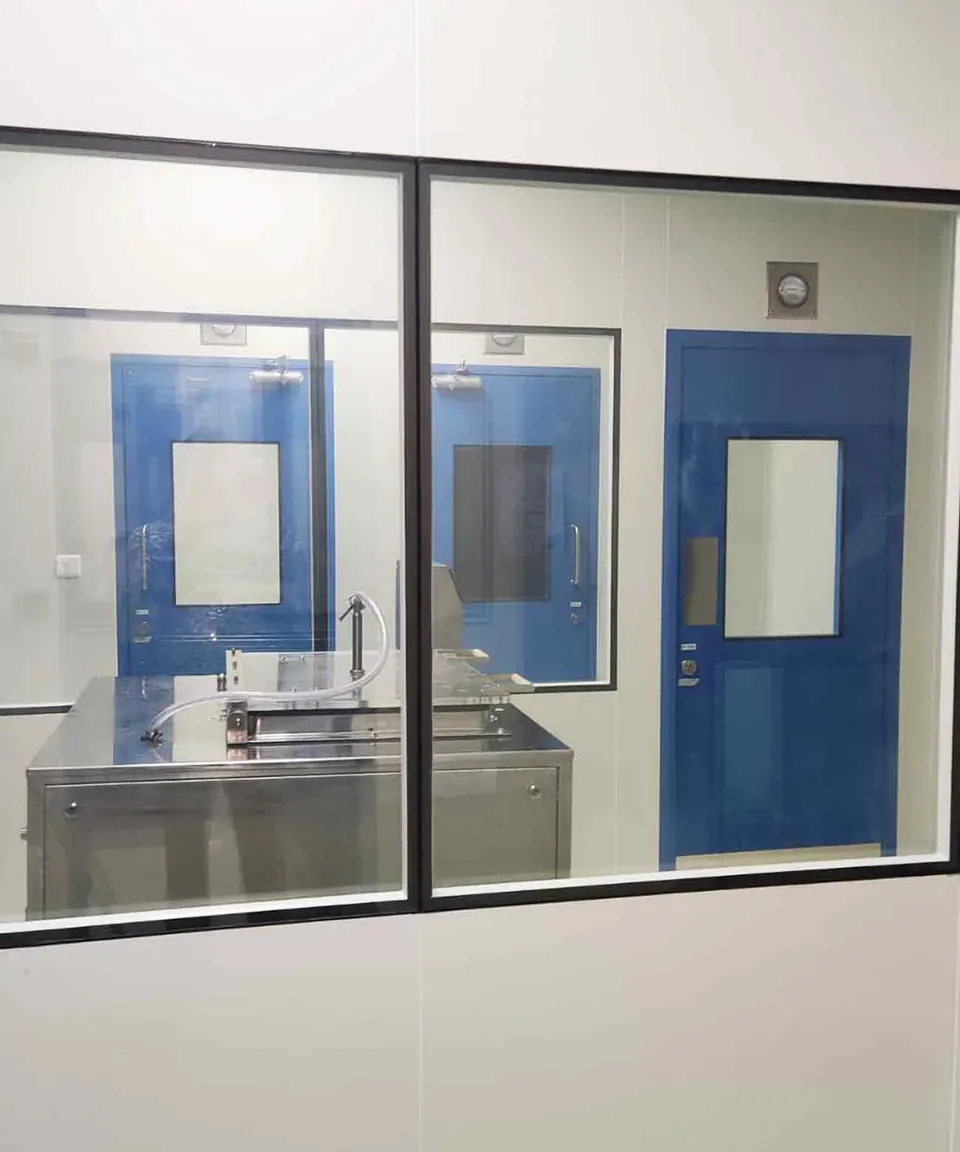
We supply sterile filling lines for vials, ampoules and prefilled syringes, and we build the cleanrooms around them. For Lab & Allied in Kenya, Fabtech delivered a turnkey project, which means one contract covers the whole job.
It covered oral solid dosage, laboratory and sterile areas. Read sterile facility design and construction for the rooms in order and for what happens at the filling point.
Vaccines and biosimilars
Vaccines and biosimilars are made with living cells.
A biosimilar is a medicine made to match a biological medicine that is already approved. The rooms keep the product clean.
Where the plant handles live viruses or bacteria, the rooms must also keep them inside, away from the workers.
Many of them are potent, which means a very small amount can harm a healthy person. So the plant needs containment, which means keeping a harmful product away from the people who make it.
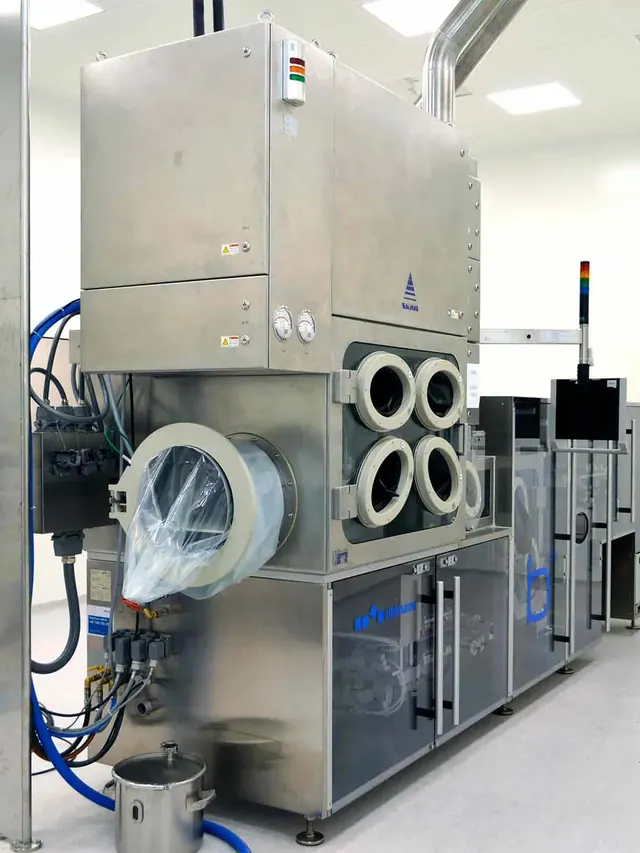
The main tool is the isolator, a sealed cabinet that the operator works in through gloves fixed in its wall.
Sudair Pharma in Saudi Arabia runs an oncology facility. Fabtech delivered its cleanrooms, HVAC, clean utilities and clean infrastructure.
The production facility covers 6,285 square metres. The oncology manufacturing facility page explains the layers of containment, from the building to the product.
Tablet press
Dust extraction
Tablets
Mixing tank
Wall between products
Oral solid dosage and liquids
Oral solid dosage means medicines that are swallowed in solid form, such as tablets and capsules.
Liquids include syrups and suspensions, which carry fine solid particles in a liquid. These medicines are not sterile.
The main jobs of the plant are to control dust and to stop one product mixing into the next.
Fidson Healthcare in Nigeria planned six dosage lines in one plant. A dosage line is a production line for one type of medicine.
Fabtech's contract covered the cleanrooms, HVAC, utilities, high purity water and laboratory. The project had stopped for over 18 months when we took it over, and we commissioned our scope in 15 months.
We build GMP and WHO compliant plants. GMP means good manufacturing practice.
Each plant is made to withstand inspection under USFDA (United States), MHRA (United Kingdom) and TGA (Australia). Before handover, each room and system goes through four qualification steps: design, installation, operation and performance.
Fabtech serves three industries only: pharmaceutical, biopharmaceutical and healthcare. Is your medicine, for example an ointment or a cream, not named on this page? Tell us what you plan to make.
FAQ
Which industries does Fabtech build for?
Fabtech serves three industries only: pharmaceutical, biopharmaceutical and healthcare. Our plants cover injectables and sterile products, vaccines and biosimilars, oncology medicines, and oral solid dosage and liquids. In hospitals, we build the cleanrooms and the HVAC. We have worked on more than 760 projects in more than 65 countries.
Can one plant make more than one kind of medicine?
Yes. Each kind needs its own rooms, machines and level of cleanliness, and all of them can share one site. Fidson Healthcare in Nigeria planned six dosage lines in one plant.
Does Fabtech supply the equipment that goes into the plant?
Yes. Fabtech supplies containment, process, water and clean-air equipment, and makes its own cleanroom panels. One partner designs the rooms and supplies the machines, so the parts of the plant are designed to fit together.
What do you need from us to start?
Tell us the product, its form (tablet, liquid or injection) and the countries where you will sell it. The product and its form decide the rooms and the machines. The countries decide which regulator will inspect the plant, and so which standard we design to.
Related and next step
Solutions for Aircleanroom systems, HVAC, containment and clean-air equipment.
Solutions for Waterpurified water, water for injection and pure steam systems.