Oral solid dosage facility design for tablet and capsule plants
Fabtech handles oral solid dosage facility design for tablet and capsule plants as one job. For Lab & Allied in Kenya, we delivered a turnkey project in oral solid dosage, laboratory and sterile areas.
We reply within 24 hours.
Turnkey means one contract covers the whole job: the design, the equipment and the testing of the finished plant. Sterile means free of all living germs.
For tablets and capsules (oral solid dosage, or OSD for short), the design starts with the powder. We plan where the powder enters, which rooms it passes through, and how its dust and moisture are controlled.
We also supply the process equipment. The job can be a new plant or a new line in a plant that already runs.
On this page
What your OSD facility design must decide first
Oral solid dosage facility design decides how powder, people, air and water move through a tablet and capsule plant.
All of this is decided before anything is built. The design sets the rooms and their order, and the air pressure and humidity in each room.
It also sets the machines, and the tests that prove the finished plant works.
Key fact Detail
- Lab & Allied, Kenya
- A turnkey project in oral solid dosage, laboratory and sterile areas
- CPCM, Algeria
- Consultancy for the tablet and capsule section, and 2,712 square metres of modular panels
- Fidson Healthcare, Nigeria
- A stopped project. Our scope was commissioned in 15 months
- Capsule filling machines
- We supply capacities from 25,000 to 150,000 capsules an hour
- Navesta, Sri Lanka
- A research facility for low humidity granulation, completed within one year
Before the first layout, the owner must make these decisions.
Each one changes the building, and each is costly to change later.
Decision What it changes in the plant
- Which products, and how many
- A single product needs one line. Many products need more rooms, separate air for each room and a proven cleaning method between products. Count the products that will run at the same time. That count decides the number of rooms more than the yearly output does
- How potent the strongest product is
- A potent product harms workers in very small amounts. The plant then needs containment, which means keeping a harmful product away from the people who make it. For this, isolators enclose the machines. An isolator is a sealed cabinet that the operator works in through gloves fixed in its wall. The full design is on our oncology manufacturing facility page
- Wet granulation, dry granulation or direct compression
- Granulation makes fine powder into grains that flow and press well. The wet route needs a granulation room and a dryer. Direct compression presses the powder without granulation and needs neither. For a comparison of the routes, read our granulation techniques guide
- Batch size and yearly output
- They set the size of each machine, the room heights and the number of lines
- Any product that moisture damages
- Effervescent tablets, which fizz in water, need very dry rooms. Gelatin capsules need humidity held in a narrow range
- The countries you will sell in
- The plant is designed for the strictest regulator that will inspect it. This sets the room finishes and the documents
- A new building or an existing one
- In an existing building, the process must fit the columns and floor heights already there. See greenfield and brownfield projects
- One floor or several
- On several floors, powder falls from one step to the next by gravity. On one floor, it moves in bins (closed containers) or by vacuum transfer
The granulation route and the potency of the strongest product decide whole rooms and whole air systems. Decide these two first.
Fabtech then delivers the plant as a turnkey pharmaceutical project.
What decides the layout of a tablet and capsule plant
The layout of a tablet and capsule plant follows a few rules.
They are decided early, because they are hard to change once the walls are built.
Material moves in one direction
Raw material enters at one end of the production area, and finished packs leave at the other. The powder does not return through a room it has already left.
People and material enter by different routes
Workers come in through changing rooms. Material comes in through its own airlock, a small room with two doors that are never open at the same time.
Waste leaves by a third route.
Dust stays in the room where it is made
Powder becomes dust each time it is moved in the open. In most tablet plants, the corridor is held at a higher air pressure than the process rooms.
Air then flows from the corridor into each room, which keeps dust from moving to the next room. Dust is also extracted at the machine.
Humidity and temperature are set room by room
Powder takes up water from the air. If the air is too humid, powder flows badly and sticks to the tablet press.
If it is too dry, gelatin capsule shells turn brittle. So each room has its own range, and the air system must hold it while the machines run.
Navesta in Sri Lanka needed a research and development facility for granulation at low humidity. Fabtech supplied the cleanroom systems and the HVAC (heating, ventilation and air conditioning).
We completed the project within one year, during the pandemic lockdown.
What the rooms are built from
The walls, ceilings and doors of these rooms are our cleanroom systems. If you need only a cleanroom, and the project is in India, speak to our group company Fabtech Technologies Cleanrooms Ltd.
The powder's route through the plant, room by room
Follow one batch of powder through seven stops, from the warehouse to the packed product.
At each stop, we say what the room or the machine must do. How each step works is explained in our guide to the OSD manufacturing process.
The dispensing room
In the dispensing room, each raw material is weighed in the open. A sampling and dispensing booth sends clean air down over the work area.
The air leaves near the floor, away from the operator's face. The room is usually held at a lower air pressure than the corridor, so the dust stays in it.
Fabtech supplies dedusting tunnels, which remove the loose dust from drums and sacks before they reach this room.
The granulation room
Wet granulation adds a liquid to the powder, often water from the purified water generation system. If the liquid is a solvent, the machines need flameproof construction.
Fabtech supplies a closed loop granulator, which joins the granulator, the dryer, the mill and the blender with pipes. The powder stays inside the line, which keeps it away from the operator.
The line also takes less floor space than separate machines.
The drying room
With separate machines, drying and blending each have a room of their own. Wet granules are dried before they are pressed.
A fluid bed processor lifts the granules in rising warm air, so the air reaches every granule. The room must supply a large volume of treated air and carry the wet exhaust out of the building.
The layout gives the air units and the exhaust duct space from the start.
The blending room
The dried granules are mixed with the last ingredients, so that every tablet holds the same dose. Fabtech supplies bin, octagonal, V-type and double cone pharmaceutical blenders.
A bin blender turns the same bin that carries the powder to the press. The layout then needs a bin store, a bin wash room and wide corridors.
The compression rooms
A tablet press makes fine dust as it runs, so each press usually has its own room with dust extraction. The press is chosen for your tablet and your output.
For a potent product, Fabtech supplies a tablet compression isolator that encloses the press. For capsules, Fabtech supplies capsule filling machines with capacities from 25,000 to 150,000 capsules an hour.
A capsule filling isolator contains a potent product in the same way.
The coating room
Many tablets get a thin film coat. Fabtech supplies an auto coater that follows a stored recipe, a fixed set of settings.
It holds the spray rate, the air temperature, the air volume and the pan speed for the whole batch. The coating room needs a small room beside it, where the coating liquid is prepared.
The packing hall
Tablets and capsules go into blister packs or bottles. While the product is open, the packing room is built like a process room.
After the pack is sealed, it moves to a simpler hall for cartons and labels. The packing machines are chosen for your packs and your speeds.
Fabtech supplies the granulation, drying, blending and coating machines from its pharma process equipment range.
Oral liquids: syrups and suspensions in the same plant
Many tablet plants also make oral liquids.
A syrup is a medicine dissolved in a sweet liquid. A suspension carries fine solid particles in a liquid.
An oral liquid manufacturing plant is often a second line in the same building. It shares the warehouse, the laboratory and the utilities (water, steam, compressed air and power).
It has its own rooms and air.
Purified water is the main ingredient of a syrup, so the water system is sized for both lines. Heated vessels (closed tanks) dissolve the sugar and mix the batch.
The batch passes through a filter into a storage vessel. A filling line washes, fills, caps and labels the bottles.
The main risk changes from dust to germs, because germs can grow in water-based products. So the pipes must drain fully, and the vessels and pipes are cleaned in place between batches.
Fabtech supplies process vessels and CIP systems for pharmaceutical plants. CIP means clean-in-place.
Ask us whether they suit your liquid line.
Decide on the liquid line when the plant is first designed. It costs far less to plan the space, the water and the drains at the start than to add them later.
How an OSD facility is qualified
Qualification means proving, with written tests, that the plant works as designed.
An inspector reads the test records when the plant is inspected.
The design starts from your User Requirement Specification (URS), the written list of what the plant must do. We test the finished plant against that same list.
Each machine goes through the DQ/IQ/OQ/PQ sequence: design, installation, operational and performance qualification. Each stage is explained on our equipment qualification page.
On a tablet and capsule plant, the rooms and the utilities are tested as well as the machines.
What is tested What the test must show
- Rooms and air
- Air flows from the corridor into each process room. Each room holds its humidity and temperature while the machines run
- Dust extraction
- Dust is captured at each machine and does not reach the next room
- Purified water
- The water meets its limits at every point of use, in every season
- Cleaning
- After a product change, the residue on each machine is below its limit
Fabtech builds plants that are GMP and WHO compliant. GMP means good manufacturing practice.
The US FDA writes it cGMP, where the c means current. The air class of each room is set in the design and proved at handover.
Tablet and capsule plant projects
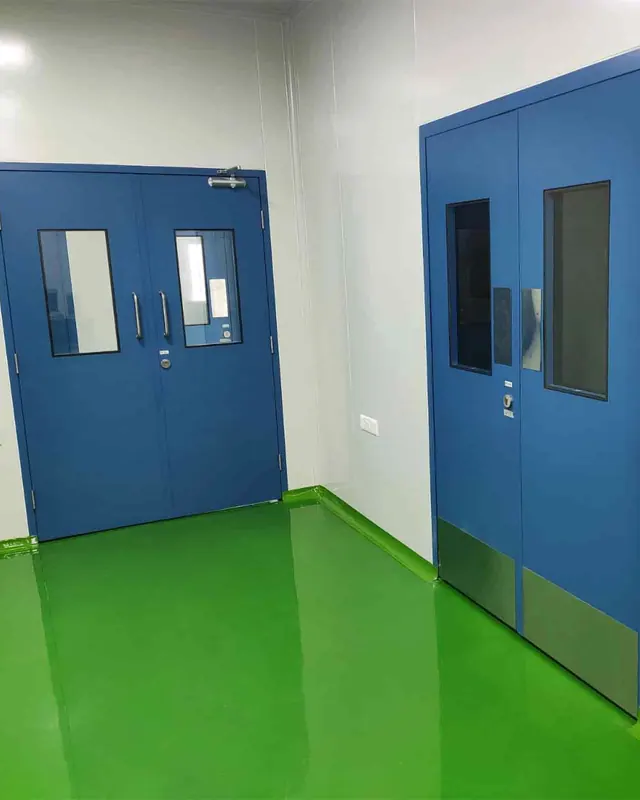
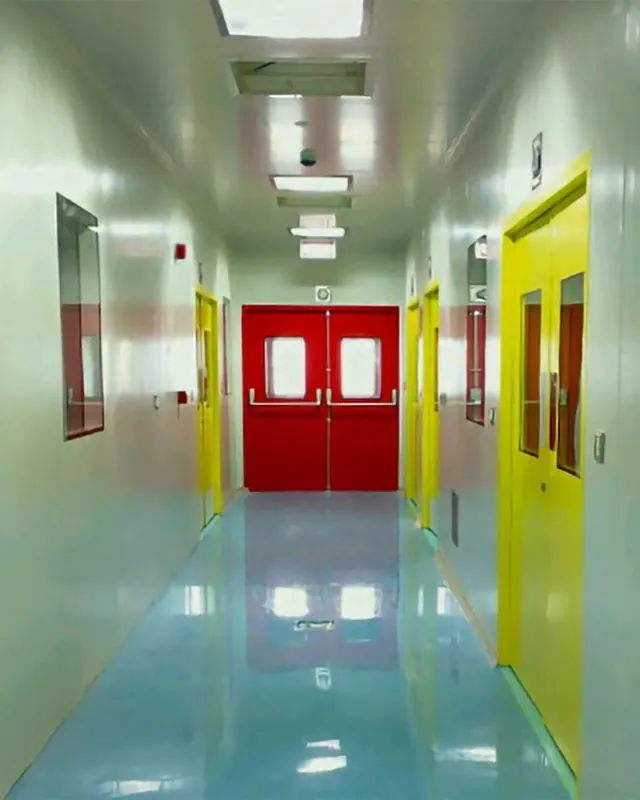

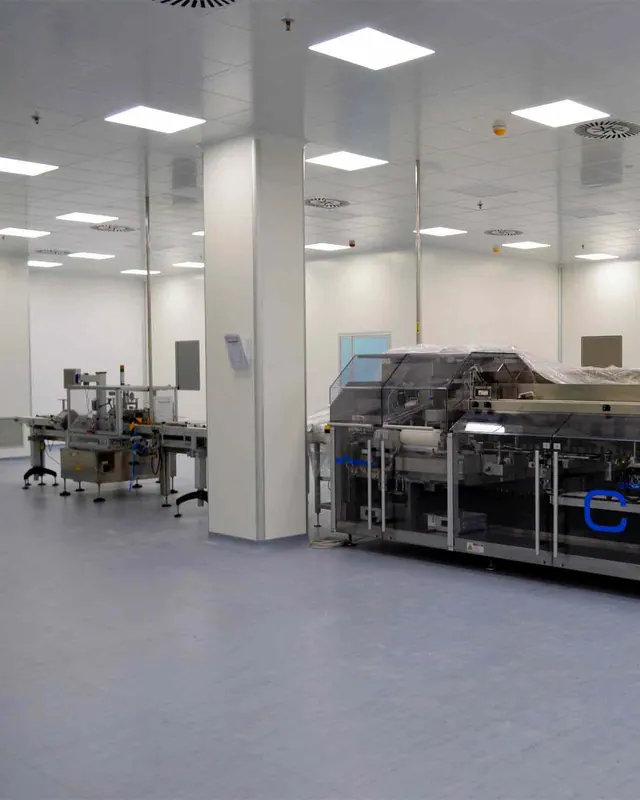
For Lab & Allied in Kenya, we delivered a turnkey project in oral solid dosage, laboratory and sterile areas. These areas need different rooms.
The tablet and capsule rooms must control dust, and the sterile rooms must keep germs out. For the sterile part, see sterile injectable facility design.
For CPCM in Algeria, we did the consultancy for the tablet and capsule section. Our scope also included 2,712 square metres of modular panels, the cleanroom equipment, HVAC, electrical work and utility piping.
Two more projects show how we deliver the rooms, the air and the utilities of a plant.
Fidson Healthcare in Nigeria planned six dosage lines in one plant. Fabtech's contract covered the cleanrooms, HVAC, utilities, high purity water and laboratory.
A dosage line is a production line for one type of medicine.
The Fidson project had stopped for more than 18 months when we took it over. Our contract included 150 HVAC, cooling and dehumidifying units.
We commissioned our scope in 15 months. Commissioning means starting and testing the plant.
Fidson is one of our four pharmaceutical projects in Nigeria.
Sudair Pharma in Saudi Arabia is an oncology facility. Oncology medicines treat cancer.
Fabtech delivered the cleanroom, HVAC, clean utilities and clean infrastructure for its 6,285 square metre production facility. When some machine makers refused to install their machines, we completed the installation, and the plant is now fully operational.
More delivered plants are on our projects page.
FAQ
How much does it cost to set up a tablet manufacturing plant?
The cost depends on the number of products, the batch size and the granulation route. The potency of the strongest product and the regulators that will inspect the plant also change it. A reliable cost estimate needs a first layout, because the layout decides the rooms, the air systems and the machines.
What is the best design for an oral solid dosage facility?
No single design is best. A good design moves material in one direction and keeps dust in the room where it is made. It holds the humidity each product needs and leaves space for the next line. The products and their potency decide the rest.
Does a tablet plant need a cleanroom?
Yes, but a different kind from a sterile cleanroom. The process rooms have smooth walls that can be cleaned, filtered air and a set air pressure against the corridor. The air class of each room is set in the design, usually against ISO 14644.
Can tablets and syrups be made in the same plant?
Yes. The syrup line is a second line with its own rooms and air. It shares the warehouse, the laboratory and the purified water with the tablet line. Plan the syrup line when the plant is first designed, so the water system is sized for both lines.
Which GMP standards should an OSD facility be designed to?
Design to the strictest regulator among the countries you will sell in. For the United States, that is the US FDA and its cGMP rules. For the United Kingdom, it is the MHRA. For Australia, it is the TGA. Many other markets follow WHO GMP.
How long does it take to build a tablet and capsule plant?
The time depends on the number of lines, the site and the approvals, so the schedule is set in the proposal. One example from a larger plant: at Fidson Healthcare in Nigeria, we took over a stopped project and commissioned our scope in 15 months.
Has Fabtech delivered a turnkey project for tablets and capsules?
Yes. For Lab & Allied in Kenya, we delivered a turnkey project in oral solid dosage, laboratory and sterile areas. For CPCM in Algeria, we did the consultancy for the tablet and capsule section.
Tell us your products, batch sizes and markets, and we will plan the plant