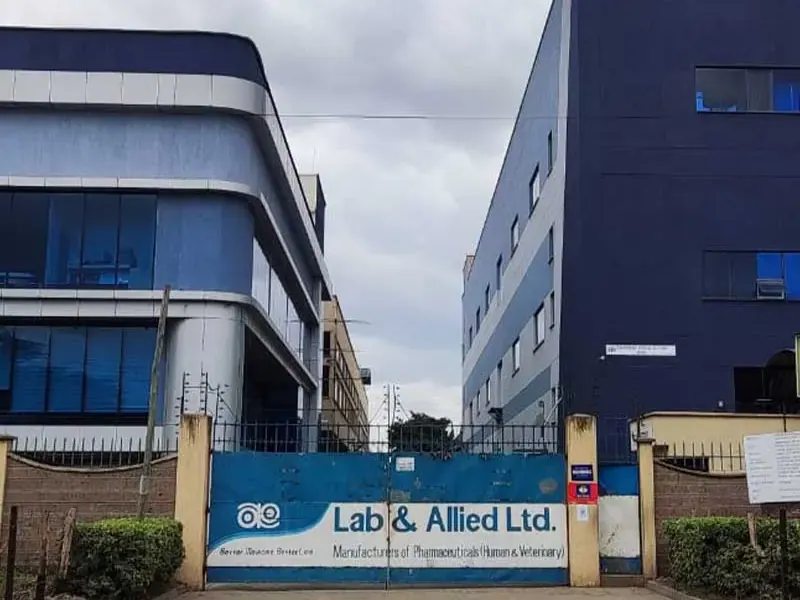
Our scope for Lab & Allied in Kenya was a turnkey project in oral solid dosage, laboratory and sterile areas. Oral solid dosage means solid medicines taken by mouth.
Fabtech Technologies supplies vial filling lines, ampoule filling lines and prefilled syringe lines for injectable plants, and builds the cleanrooms around them. An injectable medicine enters the body directly, so every dose must be sterile, which means free of all living germs.
We reply within 24 hours.
We handle sterile facility design and construction as one project. We design the rooms, install the equipment and then qualify the finished plant.
To qualify means proving, with written tests, that the plant works as designed.
The project can be a new plant or an upgrade of a running one. It can be a turnkey project, which means one contract covers the whole job.
You then deal with one team for the rooms, the air, the water, the filling line and the test documents. These systems are tested together, so they are best built together.
We build these plants so that countries can make their own injectable medicines.
Sterile facility design and construction is the planning and building of a plant for injectable medicines.
The plant keeps them free of living germs, visible particles and pyrogens. Pyrogens are substances that cause fever.
The design sets the rooms and their cleanliness grades, the air, the water and the filling line. Qualification then proves the finished plant before the first batch.
Key fact Detail
Some products are sterilised by heat in the sealed container. This is called terminal sterilisation.
Other products are damaged by heat. For these, the product, the container and its stopper are sterilised separately.
They are then brought together in very clean air. This is called aseptic filling, and our guide to aseptic filling explains the method.
The decisions in this table set most of a sterile manufacturing facility design. Settle them before the layout is drawn.
The table uses the four room grades of EU GMP Annex 1, the European rule for sterile medicines. They are A, B, C and D, and Grade A is the cleanest.
In a running plant, a RABS or an isolator can be fitted around a filling line that is already installed. Our guide to RABS in aseptic filling describes the types.
For how an upgrade is planned, see greenfield and brownfield projects.
A sterile suite is a series of rooms, each cleaner than the one before.
The grades run D, C, B and A. People enter through airlocks.
An airlock is a small room with two doors that are never open at the same time. The walk through the suite has seven stops.
Outside the suite. The warehouse, corridors and technical rooms have no grade. Staff change out of street clothes here.
Grade D. Staff put on clean factory clothing. Vials, stoppers and machine parts are washed here.
Grade C. The product solution is mixed in closed vessels. A product for aseptic filling then passes through a sterilising filter, which removes germs.
The changing room before Grade B. Staff put on sterile clothing that covers the body, the face and the hands.
Grade B, the filling room. It surrounds the filling line. With an isolator, this room is Grade C or D instead.
Grade A, the filling point. Here the sterile product meets the open container. Filtered air flows over it in one direction (unidirectional airflow). Staff reach in only through gloves.
The way out. Sealed containers pass through the wall to inspection and packing. Those rooms are outside the Grade B area, because the product is now closed.
Air enters each graded room through HEPA (high-efficiency particulate air) filters. These filters stop particles and the germs on them.
They do not stop gases or vapours. The air pressure rises with each grade, so air flows from cleaner rooms to less clean ones.
This is called a pressure cascade. Annex 1 gives a guidance value of at least 10 pascals between grades.
Materials that heat would damage enter through a dynamic pass box with VHP. VHP is vaporised hydrogen peroxide, a vapour that kills germs on surfaces.
ISO 5
ISO 5
Filling and stoppering
One-direction airflow, constant particle counting, access through gloves
ISO 5
ISO 7
The room around an open line or a RABS
Full sterile clothing, airlocks for people and materials
ISO 7
ISO 8
Mixing solutions. The room around an isolator that has openings for containers to pass in and out
Clean clothing over hair and body, airlocks
ISO 8
Set by the plant's risk assessment
Washing components. The room around a fully closed isolator
Clean factory clothing, filtered air, cleanable surfaces
At rest means the air system is running, the machines are installed but stopped, and no staff are inside. The air changes per hour for Grade A, B, C and D rooms are in our air changes guide.
Grade A and Grade B space costs the most to build and run, so keep it as small as the line allows.
Fill-finish is the last stage of making an injectable: the sterile product is filled into its container and sealed.
On a vial line, one vial goes through six steps while the line keeps moving.
Fabtech supplies vial filling lines, ampoule filling lines and prefilled syringe lines. On a vial line, the vial filling machine fills and caps the vials.
Where the product needs more separation from people, the steps run inside a vial filling isolator.
An ampoule is a small glass container. It needs no stopper and no cap, because its neck is sealed by a flame after filling.
A prefilled syringe has a shorter route. Nested syringes arrive sterile, so they skip steps 1 and 2.
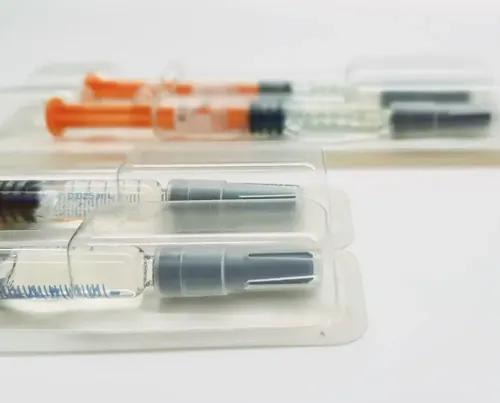
A prefilled syringe filling machine opens the tubs, fills the syringes and closes them.
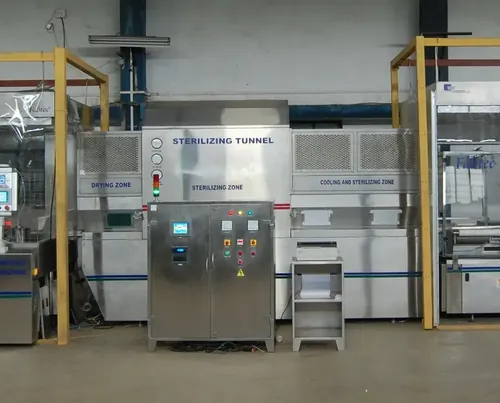
System Its job in the sterile plant
Fabtech supplies the systems that do most of the work in an injectable manufacturing plant.
One company supplies them, so the points where they meet are designed once. The tunnel is interlocked with the washer and the filling machine.
The WFI system is sized for the peak demand of filling and cleaning.
Turnkey solutions for sterile pharma facilities put all of these systems under one contract. An injectable plant turnkey project, like our other sterile manufacturing turnkey solutions, follows the ten steps of our pharmaceutical turnkey projects.
The civil and structural works are agreed project by project.
If you need only a cleanroom, and the project is in India, speak to our group company Fabtech Technologies Cleanrooms Ltd.
A sterile plant is proved as one system before it makes a batch for sale.
Qualification follows the DQ/IQ/OQ/PQ sequence (design, installation, operation and performance). For each stage, read our guide to equipment qualification.
The rooms are tested first: particle class at rest and in operation, pressure against the next room, and direction of airflow. Smoke shows how the air moves over the filling point.
The water systems are tested over a longer time, because water quality changes with the seasons. Samples are taken at every point of use.
Each machine has a factory acceptance test before it ships. It is tested again on site.
An isolator is also tested for leaks, glove integrity and its decontamination cycle.
The media fill comes last. The line fills a growth medium in place of the product.
The filled containers are kept warm, so that any germ in them can grow. No growth shows that the line, the room and the operators can keep a product sterile.
A sterile plant for export is usually designed to EU GMP Annex 1. GMP means good manufacturing practice.
For the US market, it is also designed to the cGMP (current GMP) requirements that the US FDA sets for buildings, facilities and equipment. Fabtech builds GMP and WHO compliant facilities.
WHO is the World Health Organization. Regulators such as the US FDA (United States), the MHRA (United Kingdom) and the TGA (Australia) inspect plants of this kind.
The qualification file is what they read.
Our scope for Lab & Allied in Kenya was a turnkey project in oral solid dosage, laboratory and sterile areas. Oral solid dosage means solid medicines taken by mouth.
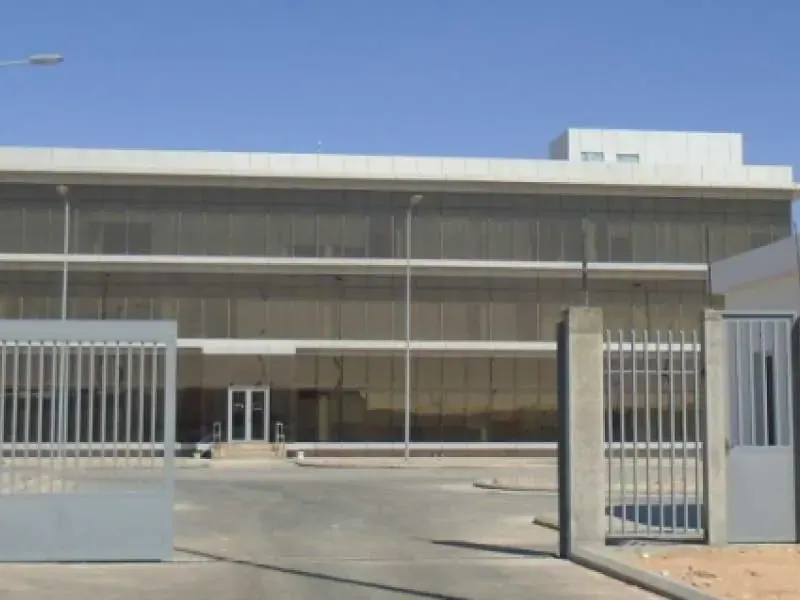
The next two are turnkey projects. They show the cleanrooms, air and clean utilities that a sterile plant also needs.
Sudair Pharma's plant in Saudi Arabia is an oncology facility, which means a plant for cancer medicines. Its production facility covers 6,285 square metres.
Fabtech delivered the turnkey project for its cleanrooms, air system and clean utilities. The project was delayed, and some of the machine suppliers then refused to install their equipment without a large extra payment.
We completed the installation. Read the Sudair Pharma case study.
Fidson Healthcare in Nigeria is a turnkey project that Fabtech took over after it had stopped for more than 18 months. Fabtech's contract covered the cleanrooms, HVAC, utilities and laboratory.
We commissioned our scope in 15 months. To commission means to start and test the systems.
The projects portfolio lists more plants.
Most vaccines and biosimilars are also filled as sterile injectables. A biosimilar is a medicine made to match a biological medicine that is already approved.
For those plants, see vaccine and biosimilar manufacturing facilities, one of the industries we build for.
Classes A, B, C and D are the four cleanliness grades for rooms that make sterile medicines. EU GMP Annex 1 defines them. Grade A is the cleanest and covers the filling point. Grade B surrounds it on an open line or a RABS. Grades C and D are for steps such as mixing solutions and washing components.
CIP means clean-in-place and SIP means sterilise-in-place. Vessels, pipework and filling parts are cleaned and then steam-sterilised without being taken apart. In a plant design, they add to the demand for water for injection and pure steam. So both systems are sized with the cleaning cycles in mind.
Parenterals are medicines given by injection or infusion. A large volume parenteral holds more than 100 millilitres in one container, such as a bottle of fluid given through a drip. A small volume parenteral holds 100 millilitres or less, such as a vial, an ampoule or a syringe. Fabtech supplies vial filling lines, ampoule filling lines and prefilled syringe lines.
EU GMP Annex 1 is the European Union's rule for making sterile medicines. It sets the room grades, the barrier systems, the monitoring and the tests a sterile plant must have. The current version has applied since August 2023. It also asks each plant for a written contamination control strategy.
Start with the point where the sterile product is open and give it Grade A air. Put the filling room around it, then the lower grades, with an airlock between each. Keep the routes for people and materials apart, and raise the air pressure with each grade. An isolator lets the room around it be Grade C or D.
No general figure is reliable. The cost depends on the number of filling lines and on the choice of isolator or RABS. The area of Grade A and Grade B rooms also changes it. So do the water for injection capacity and a freeze dryer. We give a cost for your project with the proposal.
Tell us your product, your container and your target output, and we will plan your sterile plant