Oncology manufacturing facility for cancer tablets and injectables
Fabtech designs and builds oncology manufacturing facilities, the plants that make cancer medicines. At Sudair Pharma in Saudi Arabia, we delivered the cleanroom, the air system, the clean utilities and the clean infrastructure.
We reply within 24 hours.
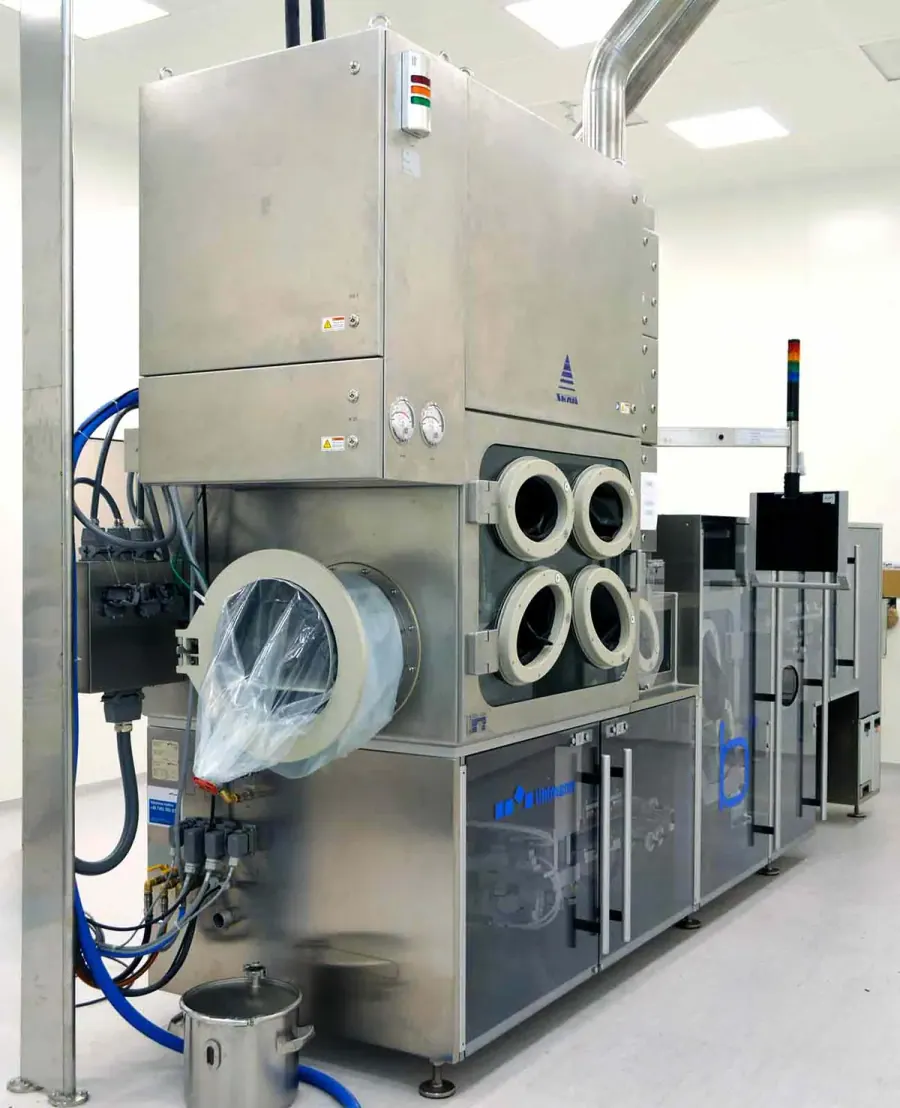
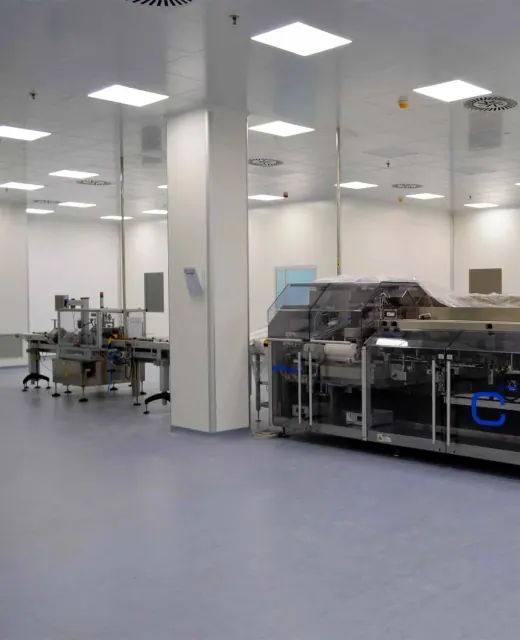
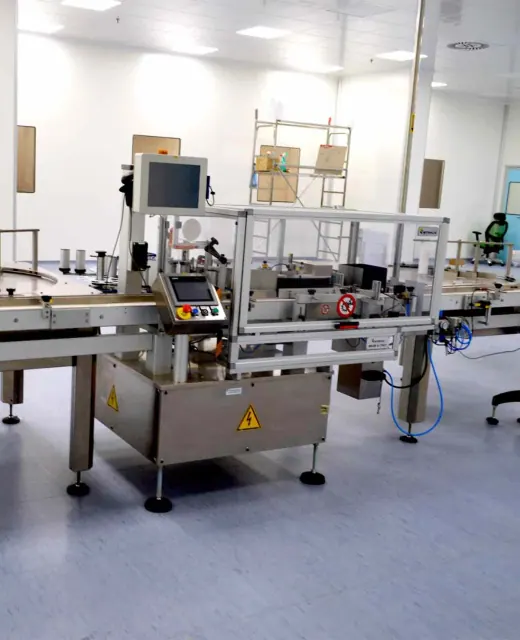
The oncology production facility covers 6,285 square metres. We build these plants so that cancer medicines can be made in the countries that need them.
Many cancer medicines are potent. A very small amount of the active ingredient, the substance that treats the disease, can harm a healthy person.
So a plant that makes these medicines has two extra duties. The first is containment, which means keeping a harmful product away from the people who make it.
The second is to stop traces of one product from getting into the next.
In an oncology plant, the product stays inside an isolator. An isolator is a sealed cabinet.
The operator works in it through gloves fixed in its wall. We supply the rooms, the air system, the isolators and the closed transfer points as one project.
A product list is enough to start.
On this page
Oncology manufacturing facilities: what Fabtech delivers
Fabtech delivers oncology manufacturing facilities for cancer tablets, capsules and injectables.
Each of these plants makes cancer medicines and keeps them inside closed equipment at every step. A cytotoxic medicine is a medicine that kills cells, and many cancer medicines are cytotoxic.
So no step is left open, from the first weighing to the last waste bag.
Key fact Detail
- Oncology project
- Sudair Pharma, Saudi Arabia
- Production facility
- 6,285 square metres
- What Fabtech delivered
- Cleanroom, air system, clean utilities and clean infrastructure
- Status
- Completed and fully operational
- Standard Fabtech builds to, on every project
- GMP (good manufacturing practice) and WHO compliant
Each active ingredient has an occupational exposure limit (OEL).
This is the highest amount in the air that a worker may breathe through a working day. Ingredients are grouped by this limit into occupational exposure bands (OEB).
There are commonly five bands, OEB 1 to OEB 5, and a higher band means a more potent ingredient. For what the limit means, read our guide to OEL levels.
- OEB 1
- OEB 2
- OEB 3
- OEB 4
- OEB 5
The layers of containment, from the building to the product
An oncology plant is built in layers.
Each layer is there in case the one inside it leaks. There are four layers, each inside the one before: the building, the room, the isolator and the transfer point.
Waste and cleaning come after them, because waste must leave through every layer.
Layer 1. The building or the segregated block
Cytotoxic medicines are made apart from other medicines. On a new site, the outer layer can be a separate building.
In a working plant, it can be a segregated block, a closed part of the building. The block has its own air system, its own entrances and its own waste route.
For both starting points, see greenfield and brownfield projects.
The block keeps cancer products away from every other product on the site. It does not stop dust from moving between the rooms inside it.
Layer 2. The room
Inside the block, the rooms where powder is open are held at negative pressure. Air pressure is lower in the room than in the corridor, so air flows in and dust stays there.
People and materials pass through an airlock, a small room with two doors that are never open at the same time. At the exit, a mist shower wets the dust on the operator's suit, so the dust cannot rise into the air again.
Room pressure protects the rest of the building. It does not protect the person who works in the room.
Layer 3. The isolator
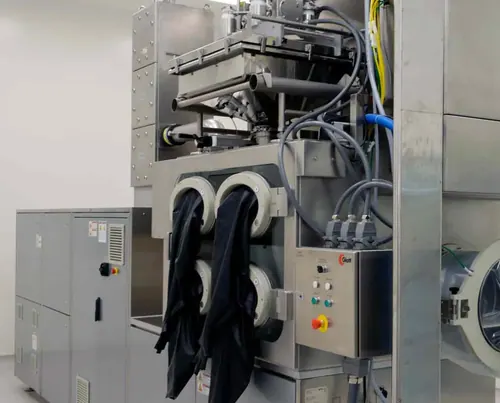
An isolator encloses an open step, or several steps in a row. It is held at negative pressure, and the operator reaches in through glove ports.
Air enters through a HEPA filter, a filter that traps very fine particles, and leaves through two. These filters stop particles.
They do not stop gases or solvent vapour. So a process with solvents also needs its exhaust air cleaned, for example by a scrubber.
Fabtech supplies containment isolators for potent products.
The isolator protects the operator. It does not stay closed all day, because material must go in and come out.
Layer 4. The transfer point
Material goes into the isolator and comes out of it at a transfer point. Containment is most easily lost here.
A pass box is a small chamber with two doors that cannot both be open. A rapid transfer port (RTP) is a docking port in two halves.
It opens only after both halves are sealed together. A split butterfly valve works the same way for powder, with one half on the isolator and one half on the bin.
The transfer point keeps the product closed in while it moves. It does not clean the equipment or remove the waste.
Waste and cleaning
Everything that touched the product is treated as contaminated.
Waste leaves the isolator through a waste liner port, into a bag that is sealed before removal. The chamber is washed and dried in place, and the wash water is collected for safe handling.
Used filters are changed through safe-change housings, so the operator does not touch what the filter collected.
Cleaning also does the second duty of the plant. It removes one product before the next product starts.
Cancer tablets and capsules compared with cancer injectables
Oral solid dosage forms are tablets and capsules.
Injectables are liquids or powders filled into vials and syringes. Both forms need containment.
Injectables must also be sterile, which means free of all living germs.
An injectable has two needs, and they ask for opposite air pressures.
Positive pressure pushes air out of an enclosure, and this protects the product.
Negative pressure pulls air in, and this protects the operator.
A sterile cancer injectable needs both at the same filling point.
For a full comparison, read positive and negative pressure in the pharmaceutical industry.
A common answer is an isolator with several chambers and a pressure cascade between them. A pressure cascade is a series of steps in air pressure from one space to the next.
Cancer tablets and capsules
- What the plant protects
- The operator and the next product
- Where the product is most exposed
- Weighing, granulation, tablet compression and capsule filling
- Main barrier
- An isolator at negative pressure around each open step
Cancer injectables
- What the plant protects
- The operator, the next product and the sterility of the medicine
- Where the product is most exposed
- Weighing the active ingredient, and filling the open vial or syringe
- Main barrier
- A filling isolator with Grade A air, the cleanest air grade, over the open container
The tablet and capsule side has the same rooms as any tablet plant. These are covered under oral solid dosage facility design.
The injectable side has the same rooms as any sterile plant. For those, read sterile facility design and construction.
An oncology plant adds containment to both.
A hospital pharmacy meets the same problem when it prepares a cancer medicine for one patient. See the hospital pharmacy cleanroom.
Containment equipment for each process step
Each step where the product is open needs protection. This is what Fabtech supplies for each step, with a note where a cancer product needs more.
Sampling and weighing the active ingredient
A drum of pure active ingredient
Charging a reactor, if the active ingredient is made on site
Powder going into the reactor
Granulation, drying and blending
Powder moving from machine to machine
Closed loop granulation line, with closed transfer between the machines and a split butterfly valve for contained loading and unloading
Filling vials, prefilled syringes and cartridges
The open vial, syringe or cartridge
Filling isolator line, an aseptic isolator. A cancer product needs a contained version (see the note after this table)
Sterility testing
Samples of the filled batch
Sterility testing isolator, an aseptic isolator. The same note applies
The filling isolator line and the sterility testing isolator that we supply are aseptic isolators, which means they keep germs away from the product. For a cancer product, they must also keep the product in.
Tell us the product, and we will confirm what we can supply for these two steps.
The granulation isolator holds the granulation machines in one isolator. The potent API processing isolator (PAPI) is for potent active pharmaceutical ingredients (APIs).
Both belong to the same range of pharmaceutical isolators.
The facts that decide the design
Send these facts with your enquiry. They decide which devices the plant needs.
The exposure limit of each active ingredient, in micrograms per cubic metre
How strong the containment must be, and the figure it is tested against
The dosage forms: tablets, capsules or injectables
Whether the plant needs a sterile suite as well as a contained one
The number of products, and how often the line changes product
How much of the cleaning is done in place, and how long a changeover takes
The batch size
The transfer method: pass box, rapid transfer port or split butterfly valve
The solvents in the process
Whether the exhaust needs a scrubber, and whether the equipment must be flameproof
A band name alone is not exact enough for a design. No regulation sets the bands, so two suppliers can put the same ingredient in different bands.
Agree the exposure limit itself with every supplier. For the decisions that come next, read our guide to selecting a pharmaceutical containment system.
How containment is proved
A containment figure on a datasheet is a design intent. It becomes a measured result only after a test on the installed equipment.
The test uses a surrogate, a safer powder that takes the place of the real active ingredient. After the system is started and tested, certified hygiene professionals carry out the test and work closely with your team.
The results are independently certified. The method is in our guide to OEL validation by surrogate testing.
Each isolator and each room also goes through qualification, which means proving, with written tests, that the plant works as designed. The stages are DQ/IQ/OQ/PQ: design, installation, operational and performance qualification.
Each stage is described under equipment qualification.
Fabtech builds GMP and WHO compliant facilities. Regulators check the GMP rules when they inspect a plant.
WHO is the World Health Organization, and its version of these rules is called WHO GMP.
Fabtech's oncology project: Sudair Pharma, Saudi Arabia
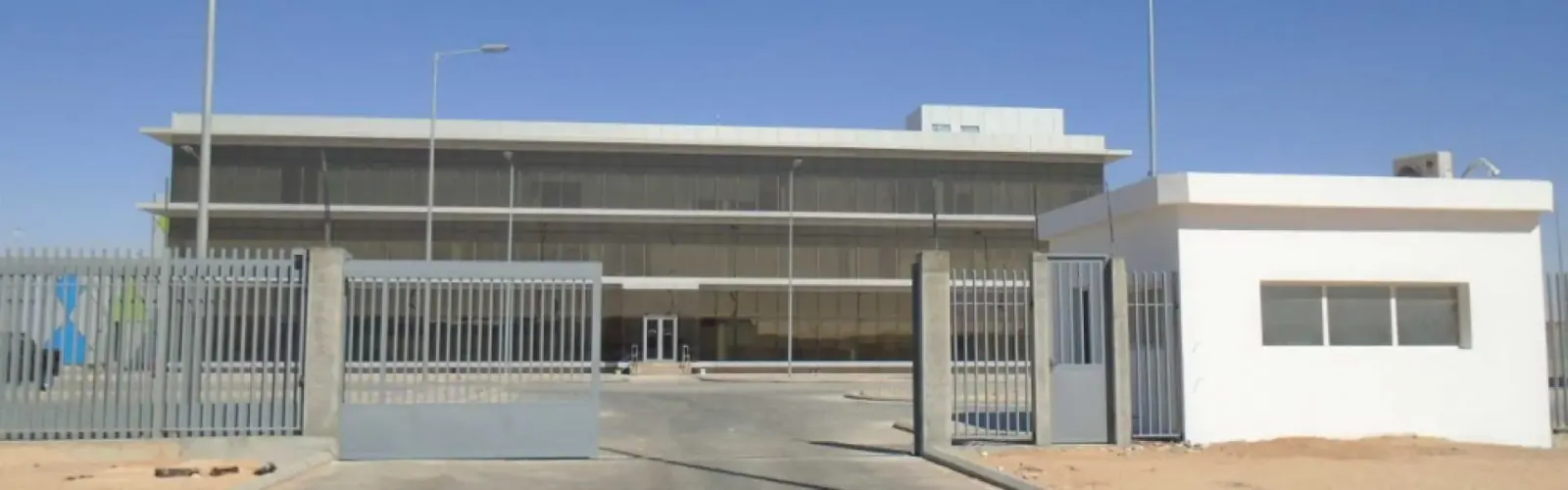
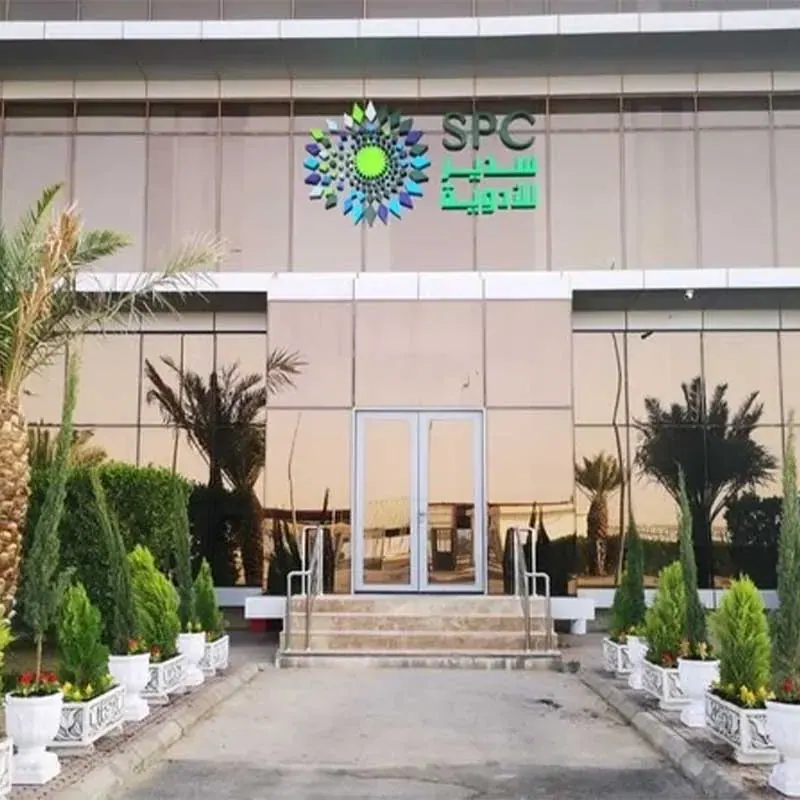
Sudair Pharma, Saudi Arabia. Sudair Pharma's plant is an oncology facility.
Before it decided, Sudair sent a team to visit us, assess our technical teams and check our references. It then awarded Fabtech the cleanroom, the HVAC (heating, ventilation and air conditioning), the clean utilities and the clean infrastructure.
Clean utilities are the purified water, steam and gases that a plant uses. The production facility covers 6,285 square metres.
Some of the machine suppliers would not return to install their machines, so Fabtech completed the installation. The plant is now fully operational.
Read the full story in the Sudair Pharma case study. Sudair is one of three Fabtech pharmaceutical projects in Saudi Arabia.
Oncology is one of the industries we build plants for. Containment is often one part of a complete plant.
We then deliver it inside one of our pharmaceutical turnkey projects, where one contract covers the whole job.
FAQ
What is an oncology manufacturing facility?
An oncology manufacturing facility is a plant that makes cancer medicines as tablets, capsules or injectables. The active ingredients are potent, so each open step runs inside closed equipment. The plant is also kept apart from other products, with its own air system, airlocks and waste route.
Which oncology project has Fabtech delivered?
At Sudair Pharma in Saudi Arabia, Fabtech delivered the cleanroom, the air system, the clean utilities and the clean infrastructure. The oncology production facility covers 6,285 square metres. The plant is completed and fully operational.
What is HPAPI in pharma?
HPAPI means highly potent active pharmaceutical ingredient. It works at a very small dose, so a very small amount in the air can harm a worker. Many cancer ingredients are HPAPIs. In a plant, they are handled inside isolators at negative pressure.
Where is chemotherapy made?
Chemotherapy medicines are made in pharmaceutical plants, usually in a building or a segregated block used only for cancer products. Rooms where powder is open are held at negative pressure, and each open step runs inside an isolator. Injectable chemotherapy is also filled under sterile conditions.
Which isolator is used for cytotoxic and highly potent products?
Cytotoxic and highly potent products are handled in a containment isolator held at negative pressure. It is sometimes called a cytotoxic isolator or a high potent isolator. The operator works through gloves, the exhaust air passes through two HEPA filters, and material moves through closed transfer ports.
Can cancer tablets and cancer injectables be made in one facility?
Yes. In such a plant, the two forms have separate rooms. The tablet and capsule rooms hold dust in. The filling rooms must also keep the product sterile.
What is cytotoxic waste?
Cytotoxic waste is anything that has touched a cytotoxic product: used gloves, filters, wipes, wash water and rejected product. In a plant, solid waste leaves the isolator in a sealed bag through a waste port. Wash water is collected for safe handling. Local rules decide how the waste is finally destroyed.
Tell us your products and their exposure limits, and we will plan the containment