Chilled Water

Chilled water is how most large buildings, and almost every pharmaceutical plant, are cooled. For a pharmaceutical project, Fabtech designs and supplies the complete high side set-up with DX systems, chillers and cooling towers.

We reply within 24 hours.

These buildings do not pipe refrigerant to each room. A central plant makes the water cold.

Pumps carry it through the building to the air handling units, the machines that send air to the rooms. Coils inside these units use the cold water to cool and dry the air.

This is called the chilled water system. The rest of the HVAC system (heating, ventilation and air conditioning) depends on it.

The plant room that makes the water cold is called the high side. The chilled water plant is one part of a Fabtech pharmaceutical project.

It comes with the pumps, the piping and the controls. We size it to the plant's cooling and dehumidification load, which is the heat and the moisture the plant must remove.

What a chilled water system is

A chilled water system, or CHW system, is a central cooling system.

Chillers cool water to approximately 7 to 12 degrees Celsius. Pumps send it through insulated piping to every HVAC component that needs cooling.

Coils in the air handling units take heat from the air into the water. The warmer water then goes back to be cooled again.

Lowering the temperature of the water produces the cooling effect, together with the other HVAC components. A building with many air handling units has a central chilled water HVAC system.

The whole HVAC water system is designed around it.

DX system

For small areas, the other choice is a DX system. DX (direct expansion) systems in HVAC are a popular option.

They are popular because they remove most of the ductwork and piping of a central plant. Installation is easier, the overall system costs less and the system requires less maintenance.

A DX system is also quieter and gives good humidity control for a single space.
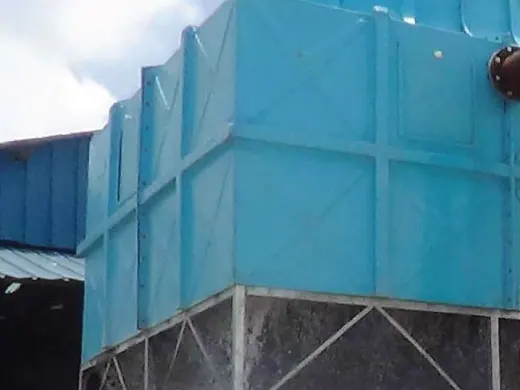
Chilled water system

A chilled water AC system is used in the other case. A central chilled water system is the practical choice when a building has many air handling units.

It is also the practical choice when every room needs tight, stable conditions.

How the system works

Four types of equipment do the work.

The chiller removes heat from the water using a refrigeration cycle.

The cooling tower removes the unwanted heat from the chiller through evaporation. It releases this heat to the outside air.

Pumps move the chilled water out to the building and back.

The air handling units hold the cooling coils, where the chilled water cools the air.

Water-cooled chillers are more efficient than air-cooled chillers. They release heat into evaporating water, which works better than releasing it into hot outside air.

For this reason, most plant-scale systems use water-cooled chillers with cooling towers. It is also why the cooling tower's water treatment affects the energy bill of the whole plant.

ComponentWhat it doesWhat decides its size
ChillerCools the water from around 12 to around 7 degrees Celsius using a refrigeration cycleThe building's peak cooling and dehumidification load
Cooling towerReleases the chiller's heat to the atmosphere by evaporationChiller capacity and the local wet-bulb temperature
Primary pumpsMove water through the chillersThe flow each chiller needs
Secondary or distribution pumpsCarry water to the air handling units and backBuilding layout, pipe lengths and coil pressure drops
Air handling unit cooling coilsMove heat from the air into the water, and condense moisture out of the airRoom loads and the humidity target
Piping and insulationCarry the water while letting in as little heat as possibleFlow rates and the distances involved

High side and low side

On a pharmaceutical project, the mechanical scope is usually split into two parts.

The high side is the plant room. It holds the chillers, cooling towers, pumps, and the DX systems where they are used.

The low side is everything in the building: air handling units, fan coil units, ducts and terminals (the air outlets in the rooms). Fabtech's scope on a pharmaceutical project is the complete high side.

We design it together with the low side so the two match.

Good design of the high side equipment depends mostly on the load calculation and the redundancy strategy. Redundancy means spare capacity for when a machine stops.

A pharmaceutical plant rarely runs one large chiller. It runs two or three, sized so that the loss of one does not take a cleanroom out of specification.

Primary, secondary or variable primary flow

Buyers ask about the pumping arrangement more than any other design decision. It also decides the energy bill for the life of the plant.

Arrangement

Primary only, constant flow

How it works
One set of pumps moves a fixed flow through the chillers and the building
Where it fits
Small plants with a steady load
Trade-offs
Simple. But the pumps run at full flow whenever the plant is on
Arrangement

Primary and secondary

How it works
Primary pumps serve the chillers. Separate secondary pumps serve the building and change their flow with demand
Where it fits
Larger plants with several air handling units and changing loads
Trade-offs
More equipment. But the chiller flow stays stable and distribution uses less energy
Arrangement

Variable primary flow

How it works
One set of variable-speed pumps serves both chillers and building. Flow through the chillers changes within the chiller's limits
Where it fits
Modern plants where energy is the priority
Trade-offs
Fewer pumps and the lowest pumping energy. It needs careful controls and chillers that accept variable flow

Fabtech designs primary variable chilled water systems for pharmaceutical plants where the controls and the chiller selection support it. The energy saving is real, and it adds up over years of operation.

Variable primary flow needs a minimum-flow bypass. Without it, a chiller could trip (shut down) on low evaporator flow.

The bypass makes sure this never happens. It is the one control detail that makes variable primary flow harder to design.

If the plant's operating pattern or the chiller selection does not suit it, a primary and secondary arrangement is the safer choice. The design qualification, the formal record of the design, states why.

A single-shift oral solids plant (such as tablets and capsules) with a steady load usually uses primary and secondary pumping. A multi-block campus where cleanrooms switch on and off through the day is different.

There, variable primary flow uses fewer pumps and less energy at part load, and this pays back. This is true only if the chillers accept the turndown, meaning they can run at a lower flow.

Chilled water supply and distribution

Chilled water distribution systems are the piping networks that carry the supply out to each coil and the return back to the chillers.

Their design decides whether the air handling units furthest from the plant get enough flow on the hottest day.

The distribution system has insulated supply and return mains, with balancing and control valves at each coil. The chillers are sized for a set temperature difference across the building.

Designers choose the chilled water supply temperature and the design temperature difference together. A wider difference means less water to pump for the same cooling.

But the coils must be sized for it. The HVAC water cooling system works well only when its flows are balanced correctly.

So commissioning, the testing before handover, includes flow measurement at every coil.

Why pharmaceutical plants depend on chilled water

A cleanroom is held at a set temperature.

More importantly, it is held at a set humidity. To control humidity, the chilled water coil cools the air below its dew point, the temperature at which moisture in the air turns to water.

The moisture condenses out, and then the air is heated again. For many cleanroom areas, the latent load (the moisture removal) can come close to, or exceed, the sensible cooling load.

The sensible load is the heat that changes the air temperature.

A plant sized only for sensible heat routinely runs short on humidity control. This is why dehumidification usually sets the size of a pharmaceutical chilled water plant.

Treated fresh air units rely on chilled water for the same reason. These units pre-condition the outside air before it reaches the main air handling units.

Room conditions are a qualification parameter. For this reason, a pharmaceutical chilled water plant is typically designed with standby capacity.

It is also monitored as part of the building management system. Read our explainers on treated fresh air units and on air changes per hour in cleanrooms for the air side of the same design.

The full HVAC and clean air scope is on our turnkey cleanroom and air solutions page.

Chilled water plants from Fabtech

Fabtech delivers its chilled water plant systems as part of its pharmaceutical projects.

The scope is the complete high side set-up with DX systems, chillers and cooling towers. It has an energy saving design.

It also includes the piping and controls that connect the plant to the air handling units. We size the plant from the room-by-room load calculation of the facility, with the redundancy the cleanroom classes require.

We commission it together with the HVAC it serves.

The chilled water plant is one of the utilities in a turnkey pharmaceutical project. The same project also has the purified water, WFI (water for injection) and pure steam systems on our solutions for water page.

When one team designs the process, the air and the water, the plant room is sized once. The utilities also do not conflict with each other.

  • A cooling tower cell on a plant roof, water falling through its fill into the basin below
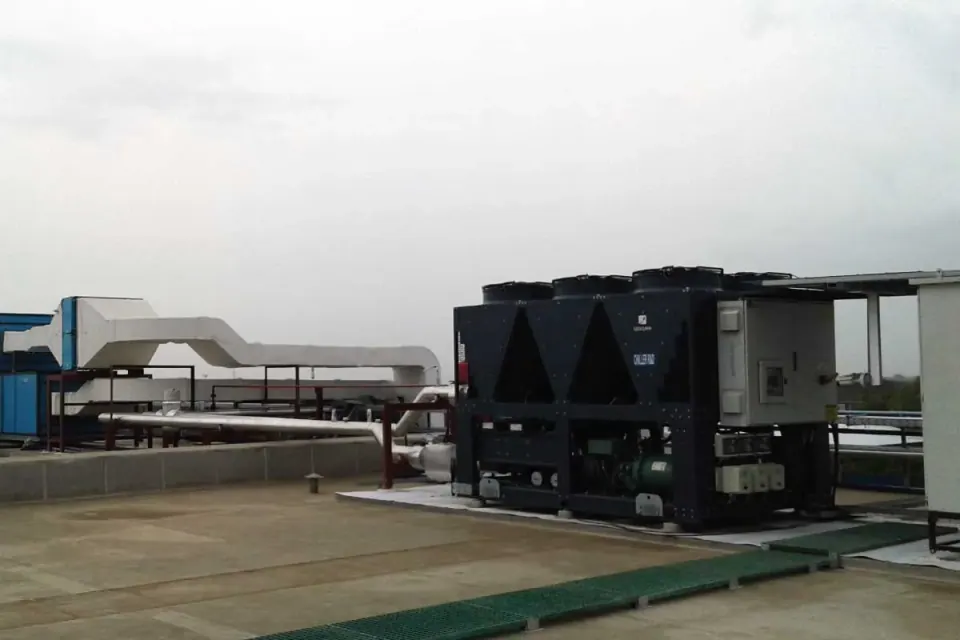
  • A row of air-cooled chillers on a plant roof, with the ductwork and pipe runs beside them
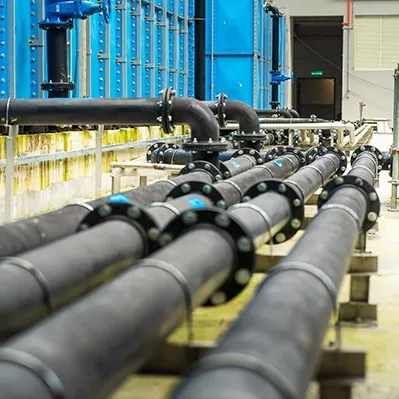
  • Insulated pipe runs with flanged joints and valves in a plant yard
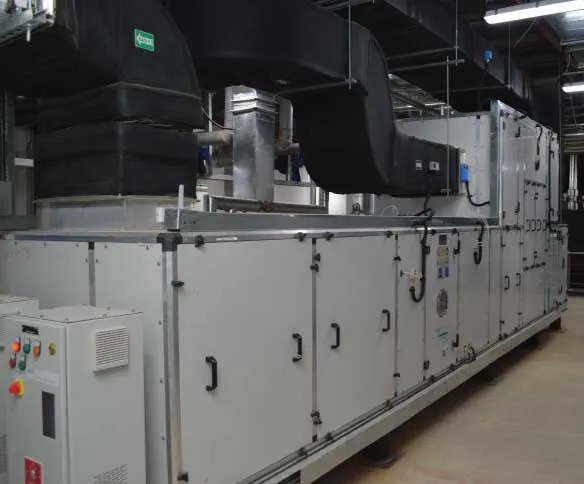
  • An air handling unit on a plant's service floor, its control panel on the casing and the duct rising from its fan section
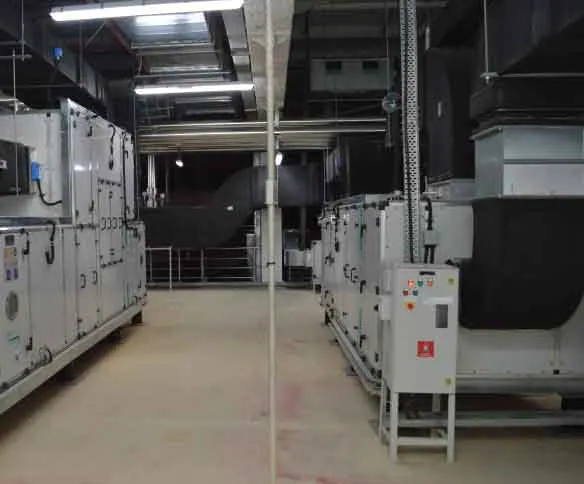
  • Air handling units in a row along a plant's service corridor

FAQ

What is a chilled water system in HVAC?

It is a central cooling system. Chillers cool water to around 7 to 12 degrees Celsius. Pumps send it through insulated piping to the cooling coils in air handling units and fan coil units. The coils take heat from the air into the water. The water then returns to the chillers to be cooled again.

How does a chilled water system work?

The chiller removes heat from the water using a refrigeration cycle. A cooling tower releases that heat to the outside air by evaporation. Pumps carry the chilled water to the air handling units, where coils cool and dehumidify the air. The pumps then bring the warmed water back.

What temperature is chilled water in HVAC?

It is typically supplied at around 7 degrees Celsius and returned at around 12. The exact values are a design choice. A wider temperature difference reduces the water that must be pumped, provided the coils are sized for it.

What is the difference between a chilled water system and a DX system?

A DX system cools air directly with refrigerant, in the unit that serves the space. It suits small areas and needs little piping. A chilled water system cools water centrally and pipes it to many air handling units. It suits large buildings, and plants that need stable conditions in every room.

What is variable primary flow?

It is a pumping arrangement. One set of variable-speed pumps serves both the chillers and the building. The flow through the chillers changes within the chiller's limits. It uses fewer pumps and less energy than a primary and secondary arrangement. But it needs careful controls and chillers that accept variable flow.

What is high side equipment?

It is the plant room equipment that produces the chilled water: chillers, cooling towers, pumps and, where used, DX systems. The low side is the equipment in the building that uses the chilled water: air handling units, fan coil units and ducts. Fabtech designs and supplies the complete high side set-up with DX systems, chillers and cooling towers.

Why are water-cooled chillers more efficient than air-cooled?

They release heat into evaporating water in a cooling tower, not into hot outside air. Evaporation carries away heat more effectively. So the chiller works against a lower condensing temperature and uses less power for the same cooling.

Why does a pharmaceutical plant need a chilled water system?

Cleanrooms are held at a set humidity as well as a set temperature. The chilled water coil removes moisture by cooling the air below its dew point. This dehumidification duty usually sets the size of the plant. Stable room conditions are also a qualification parameter.

Tell us the rooms and the cleanroom classes, and we will size the cooling load

There is no obligation. You will receive a load estimate, a plant room concept and a pumping recommendation from the team that would design and supply the plant.

We reply within 24 hours.