
From exposed communication devices Most facilities ban the use of handheld devices inside cleanrooms. If walkie talkies or cell phones must be brought inside the cleanroom, it must always be carried on the person of the operator but in a special sterile pack. Using these avoids any form of contamination to the cleanroom.
From incorrect flooring If your cleanroom requires a static control environment, an ESD floor must be installed. All equipment used in cleanrooms myst be properly grounded to the floor or you risk contamination especially when ESD carts, chairs and shoe covers are in use.
From furniture and equipment Any time you deal with moving pieces, it can create electrostatic discharge or release contaminants. It is absolutely vital for operators to keep furniture movement to an absolute minimum when working inside a cleanroom. Even something as minor as moving or adjusting the height of a chair can cause contamination.
From uncovered electrical outlets If electrical outlets are not correctly sealed, they are an open invitation for every insect in the vicinity. Insects can crawl through and contaminate the cleanroom.
From incorrect use of face masks and gowns Contamination can be caused by something as simple as an operator wearing a face mask inside out. The same goes for coveralls and gowns. When gowning up, no part of the coverall or gown should touch the floor or walls. If they do, there is risk of the contaminants and particulates entering the cleanroom on the clothing.
From tacky mats Tacky mats are perfect for picking up contaminants from the bottom of shoe, but they are also a tripping hazard. Tacky mats should be securely attached to the floor. They should also be the right size so 'both' feet in step are covered by their surface area.
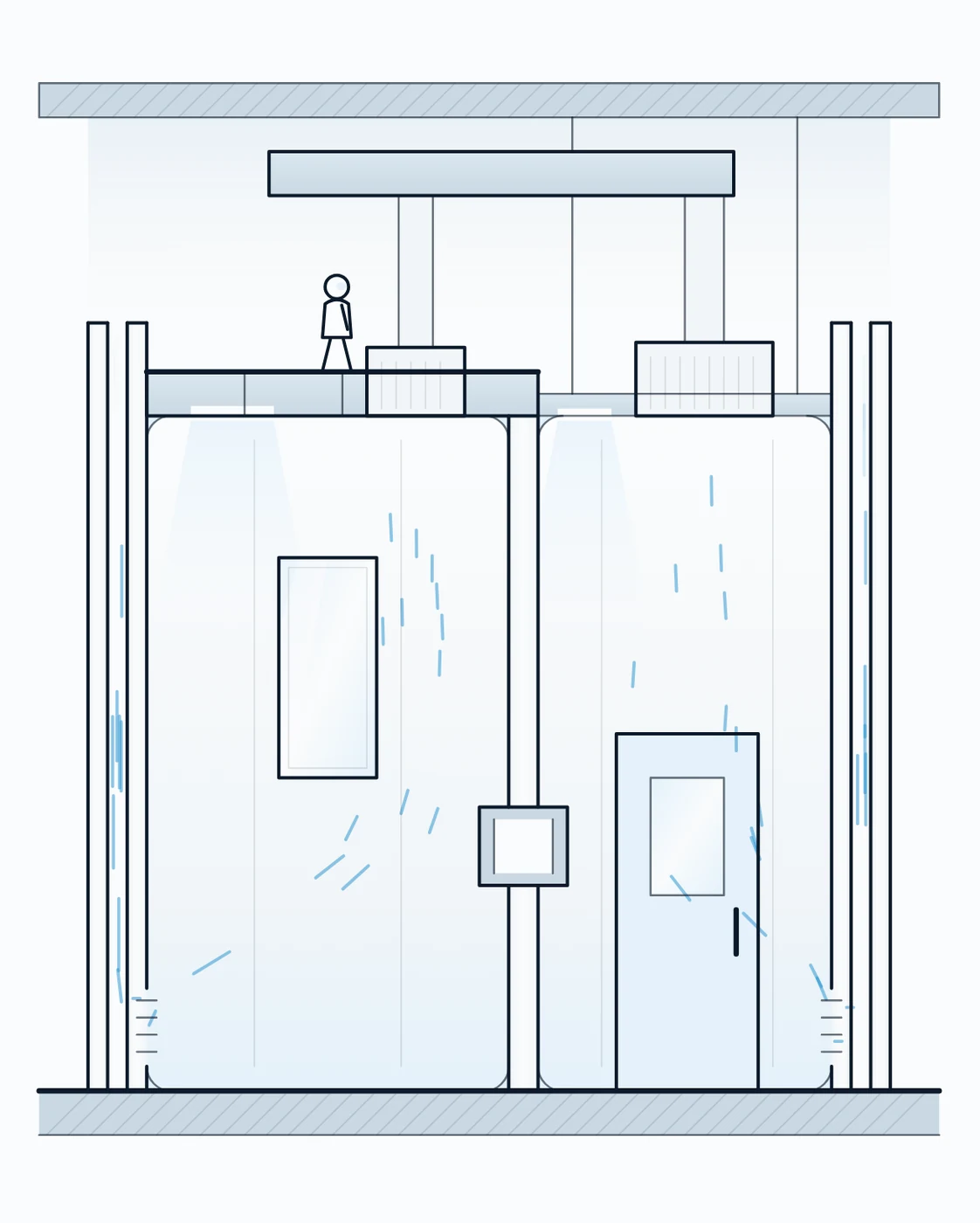
From bringing equipment and supplies into the cleanroom If you need to frequently bring equipment and supplies into the cleanroom then investing in a pass box is vital. You also need to make sure the containers in which raw materials and supplies are brought in are completely free of contaminants.
From damaged HEPA filters HEPA filters sometimes get damaged as a result of enthusiastically aggressive cleaning. Check often to ensure yours are intact.
By understanding the origins of these common contaminants you can minimise risk to your sterile cleanroom environment and processes by reducing contamination at source.