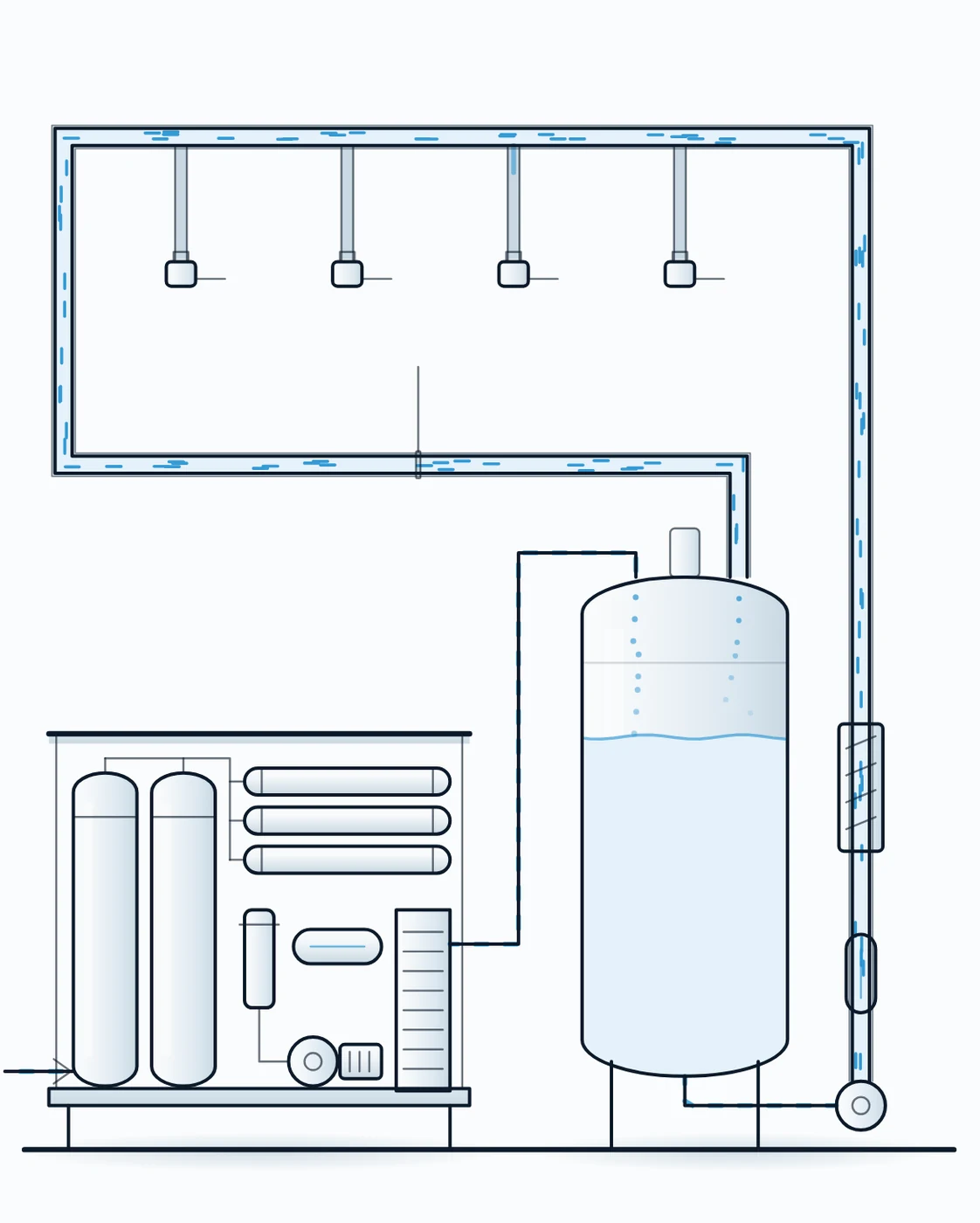
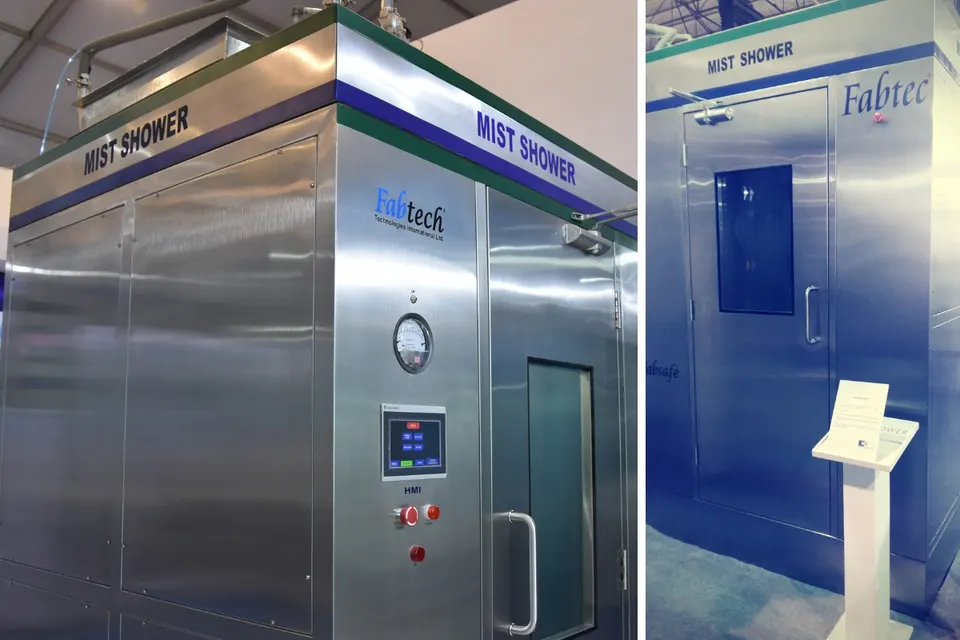
Mist showers reduce possible re-suspension of hazardous particulates in the operator’s breathing zone and contamination into the de-gowning area. It works by gently wetting the surface of the operator’s protective gown with a fine water mist, causing the powder to stick to the surface instead of becoming airborne.
It is generally of double walled construction with internal coved work chamber and material of construction is either SS 304 or SS 316 L. It can have airtight single or multi doors exits, with doors are available in SS double wall or tempered glass.
This is a customised solution and dimensions are detailed to accommodate plant layouts. The location of misting nozzles, type and cycle time are all carefully optimized to ensure uniform mist coverage and that no region is under or over-saturated with water. The washed water however minute in quantity is disposed of per prefixed SOP to the effluent treatment plant or post-neutralisation in case of potent materials. Internal classification within the system is finalised during the design stage and an appropriate filtration system is provided with safe change filters if required.
Additional features which can be part of execution include
- appropriate light with target lux level
- breathing mask to be used during misting operation
- add on compartment to discard protective clothing and safe disposal
- manual spray gun for interior cleaning
- dedicated water tank with heater arrangement with pump
The entire operation is fully automated and sequentially controlled through a PLC with CFR compliance as required. It is available in FLP and NFLP execution.
The effectiveness of the system is also dependent on mist cycle duration, operator technique during mist cycle, material and design of protective clothing as well as the physical and chemical properties of particulate and all these should be taken into consideration when evaluating effectiveness if the system. For the equipment to be effective the operator must follow correct misting procedures and the facility’s de-gowning procedure.
We, at Fabtech, have designed, built and validated mist showers for Sun Pharma, Biocon, Lupin, Torrent, Emcure and various international clientele.
All mist showers manufactured by us are subjected to
- Dye tests, during FAT using a dedicated system to ensure uniform misting of person, protective equipment and absence of dead zone demonstrating the effectiveness of the system
- Surrogate material studies, during SAT protocol execution. The use of mist showers reduces airborne concentration in the range of 140 to 170 times comparatively.
If you would like to know more about our Mist Showers, please get in touch using the form below.