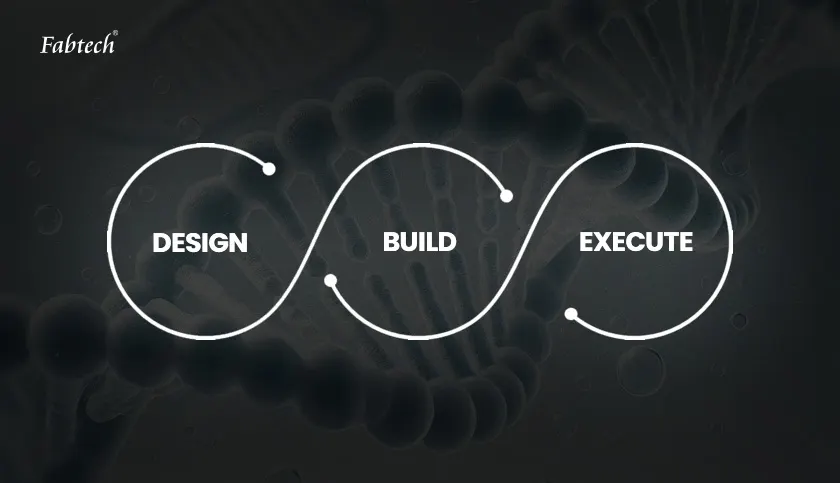
Executing such projects demands:
- Thorough planning to define objectives and conduct feasibility studies.
- Regulatory adherence, including compliance with GMP, FDA, EMA, and WHO guidelines.
- Advanced facility and equipment design to ensure process sterility and containment.
- Efficient execution, covering construction, installation, validation, and quality control.
Project Planning & Feasibility
1. Defining the Project Scope
Fabtech’s process begins by understanding the specific therapeutic product, whether it is monoclonal antibody (mAb) gene therapy, cell therapy, vaccines, etc. We also access global and regional regulatory considerations such as FDA, EMA, cGMP, and WHO to ensure compliance with operational guidelines and necessary documentation.
2. Risk Assessment
We conduct an in-depth analysis to identify potential biosafety risks that could impact product integrity. Our solutions specialise in containment technologies, microbial control, and prevention of cross-contamination.
3. Budget & Timeline Planning
Resource allocation is one of the key factors in project feasibility. Fabtech establishes clear milestones for design, construction, validation, and commissioning with realistic and achievable timelines.
Facility Design & Engineering
1. Cleanroom Design
The A/B/C/D cleanroom design for CAR T-cell therapy production and other therapies is as per ISO 14644 and cGMP. The design ensures stringent environmental control. Our modular cleanrooms for pharmaceutical manufacturing use pre-fabricated panels, allowing for flexibility, scalability, and cost efficiency.
Read more blog: Advanced Cell and Gene Therapy in Cleanroom Systems: Ensuring Precision and Safety
2. HVAC & Containment Solutions
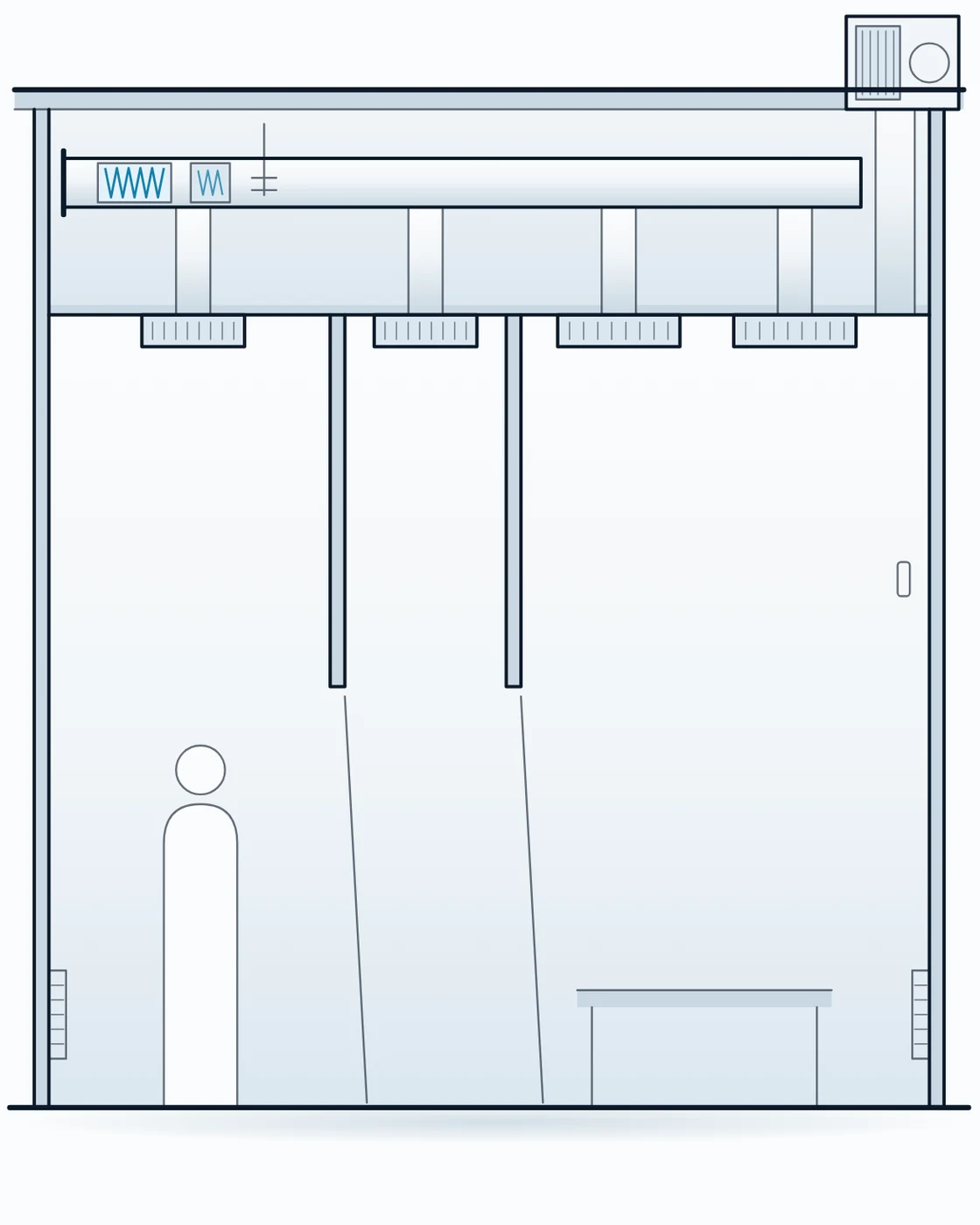
Our clean air solutions such as HVAC systems for biologics facilities and laminar airflow ensure the quality of complex product processing and the safety of personnel. The unidirectional airflow gives protection against cross-contamination. HEPA filtration keeps the process areas contaminant-free, ensuring compliance with aseptic manufacturing standards.
3. Utility Systems
Fabtech integrates essential utility systems, including Water for Injection (WFI), clean steam, compressed air, and nitrogen, to maintain a sterile manufacturing environment.
4. Bioreactors & Fermenters
We offer single-use bioreactors for flexible, small-batch production and stainless-steel fermenters for large-scale, high-volume production.
5. Aseptic Processing Equipment
Isolators, RABS, and are employed for sterility assurance in a controlled environment. Lyophilizers are used for stabilising biologics.
6. Filtration & Purification Systems
Tangential flow filtration (TFF) is used for protein concentration and buffer exchange. Precise separation and purification are done through chromatography systems. Viral clearance technologies ensure biosafety compliance.
7. Analytical & QC Tools
In-process controls like PCR, ELISA, HPLC, and mass spectrometry are used for real-time process monitoring and contamination control.
Process Development & Scale-Up
1. Upstream Processing and Downstream Processing
The continuous fluid transfer process involves upstream processing encompassing optimization of cell culture media, bioreactor conditions, and feeding strategies. Downstream processing involves purification via chromatography, buffer exchange, and concentration for final product refinement.
2. Fill-Finish Operations
Grade A aseptic filling of vials, syringes, or cartridges to ensure sterility. Automated capping and sealing prevent contamination and maintain product integrity.
3. Technology Transfer
Fabtech’s technology transfer considerations for gene therapy manufacturing and other therapeutic projects ensure a seamless transition from R&D to GMP-compliant commercial production, integrating best practices for scalability and efficiency.
Regulatory Compliance & Documentation
1. GMP Documentation
We establish Standard Operating Procedures (SOPs), batch manufacturing records, and validation protocols to ensure regulatory adherence.
2. Qualification & Validation
Installation Qualification (IQ), Operational Qualification (OQ), and Performance Qualification (PQ) are conducted for all equipment and utilities, as well as Media fills and sterility tests for aseptic validation.
3. Regulatory Filings
This includes preparing IND, BLA, or MAA submissions with stability studies and CMC data.
4. Data Integrity & Digitalization
We implement digital tools like electronic batch records (EBR) throughout the manufacturing process. 21 CFR Part 11 compliance is duly checked.
Operational Execution & Continuous Improvement
1. Workforce Training
We provide personnel training on aseptic techniques, biosafety, and quality management.
2. Process Monitoring
We use PAT (Process Analytical Technology) for real-time quality control. This involves system integration of all systems and equipment tests to ensure proper functionality.
3. Supply Chain & Logistics
Fabtech ensures cold chain management for biologics requiring cryopreservation, with end-to-end traceability via digital tracking systems.
4. Ongoing Optimization
We conduct periodic reviews to enhance efficiency, minimize environmental impact, and reduce costs.
Fabtech’s Impact on Therapy Projects
1. Improved patient outcomes
Targeted delivery systems and optimized drug formulations enhance drug efficacy and minimize side effects.
2. Faster time to market
Efficient facility layout for cell and gene therapy production accelerates the development and launch of new therapies.
3. Cost reduction
Optimized manufacturing processes reduce production costs while maintaining high-quality standards.
From initial feasibility studies to full-scale manufacturing, Fabtech provides the expertise and technology needed to optimize pharmaceutical production for advanced biologics, including monoclonal antibodies, cell and gene therapies, and vaccines.Fabtech’s end-to-end solutions empower pharmaceutical companies to seamlessly bring life-saving therapies to market. From cleanroom construction and advanced cleanroom technologies to process optimization, we provide cutting-edge solutions that ensure speed, sterility, and compliance in biopharmaceutical manufacturing. Connect with us for seamless project execution.