Nine months after the formation of our company, a meeting changed our lives. A day-long wait without a bite to eat for this short-tempered, firebrand of a man with a golden heart - Dr Hayad El Raie, owner of Medico Labs. The wait was followed by a scorcher of an interview with his top tech consultant, formerly of German Remedies, who spared nothing to ensure we weren't considered for the project.
I won't forget the moment, when after the interview, as he walked me out of the room, Dr El Raie took a banana, broke it in half and handing me a piece and said, "No one in my team wants a new company, but I feel I can trust you. Whatever you do, do it sincerely. Congratulations!" His words and this moment have been imprinted on my brain.
Our first project worth US$320,000!? This was unbelievable! We faced tougher scenes with banks refusing to fund us. Mr Chibber, the Manager of Indian Overseas Bank, told us bluntly, "You don't have a handcart of your own, and you want to buy a plane?"
When I look back, it still amazes me that Dr El Raie trusted us upstarts to deliver his project. We had no factory, just a rented office. We were nobodies who promised to deliver a project that was out of our comfort zone. What did he see in us? I don't know. I never asked him. Every project since a silent, heartfelt prayer goes to him; he was the thrust that sent our rocket into orbit.
We have delivered 200% on every project since that first one, and as a mark of respect to my late mentor Dr El Raie, I ask my team to infuse sincerity into every action on every project.
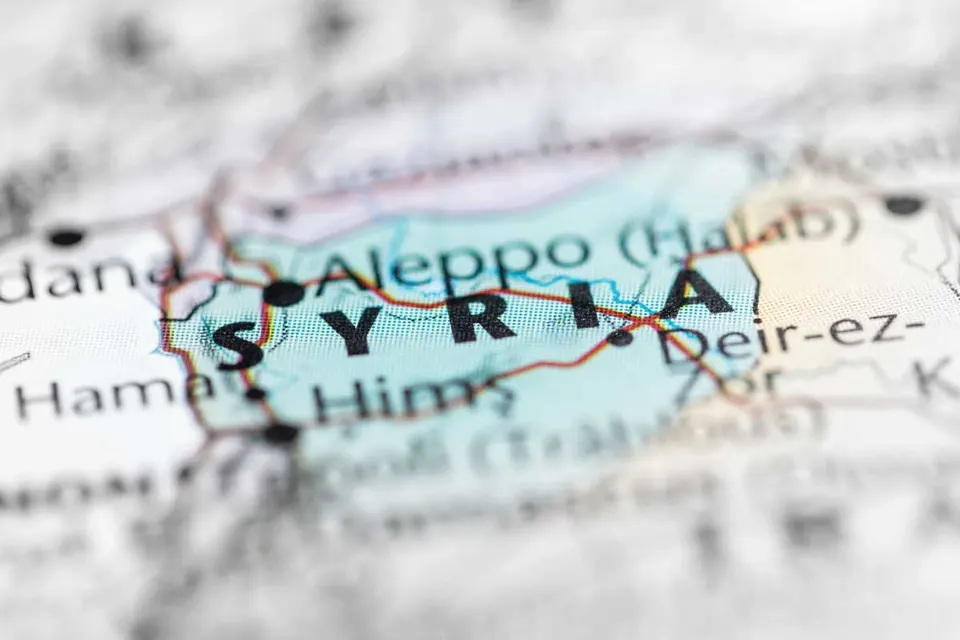
My first trip to Syria opened my eyes. Syria at the time had almost no manufacturing capability of any kind. Forget basic items like nuts and bolts; even milk had to be imported. Until I went to Syria, I thought India was underdeveloped. Syria was a revelation!
From that very first project in Syria, we went on to build most of the country's pharmaceutical manufacturing capability. We proudly saw Syria's pharmaceutical industry grow from 2 companies to 75 in 21 years. It would have been far less risky for the companies who chose us for their projects to go with known names, but they chose us, time and again. From an unknown nobody, we became a reference in the region, a trusted name.
Over the years we have built many lifelong professional and personal connections among pharmaceutical companies in Syria. We have come to think of many of the people who work in these companies as our extended family.
It hurts to see what you have built destroyed, but it destroys you when a nation you have come to love and respect is torn apart.
When the war hit, we were commissioning a project in Aleppo. We stayed. Even when the war reached our doorstep, we only evacuated at the insistence of Dr Abdul Nasser, the owner of Asia Labs. Our supervisors and Indian team left the country. Our local team stayed on. As the only project execution team left in the region, we received many requests to help move factory assets to safer zones. Some requests came from clients, some from others.
In 2012, 90 percent of our exports were to Syria and only Syria. Today, while our exports to other countries have tripled, we have zero business from Syria. And it doesn't matter one bit. Our local team continues to be stationed there to support our customers, to keep alive our mission to save lives.
We feel very strongly about our relationships in the region. We feel very strongly about the Syrian people. As with any country, Syria also has its undesirable elements. But the majority of Syrians are an awesome lot - god fearing, courageous, wonderful, industrious, hospitable people. They want to live their lives in peace - just like you and me.
It is amusing when new prospective partners lay down the condition that we move out of the region. Making new friends is welcome, and we will continue to make them, just not at the cost of old relationships. Syria gave birth to Fabtech. She wrote our story. She helped us become who we are today. Gratitude is the axis of the world. You don't abandon your mother when you get married.
Genuine, clean relationships are the foundation on which Fabtech has been built. As Scott Stratten says, "Businesses are built on relationships". So we've made building them our business.
When the war ends, and that day is coming soon, we will do whatever it takes to help rebuild Syria and make her pharmaceutical manufacturing industry whole again.
We only wish we could do more.
Allah Ybarek Bahal Surya (God bless the Syrian people)
This post was originally posted on LinkedIn on February 19, 2018.