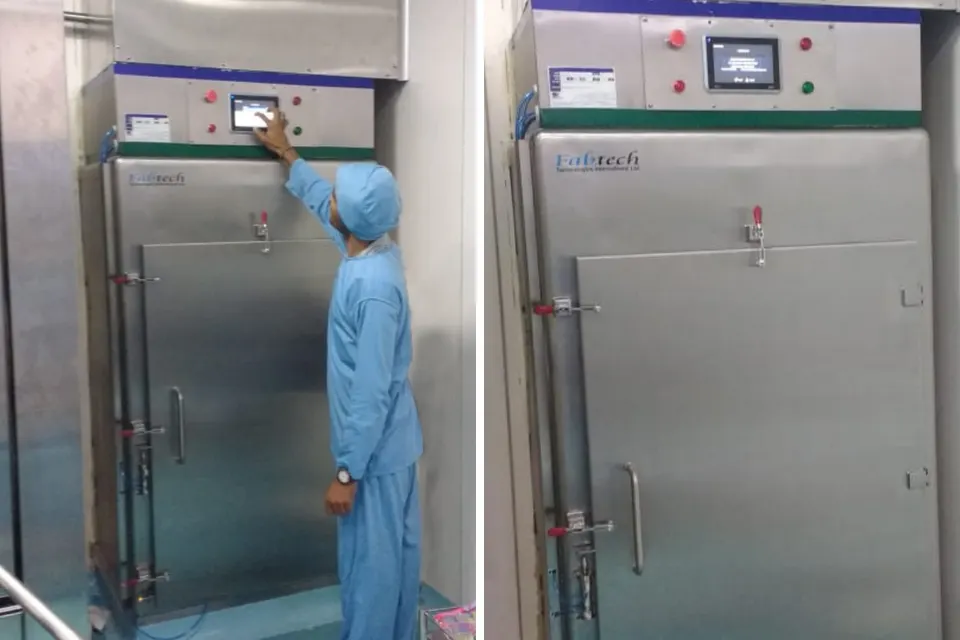
A built-in VHP generator heats the hydrogen peroxide, converting it from liquid to vapour which is then blown into the chamber, creating a lethal environment capable of killing bacteria, viruses and fungi. Each step of the process is completely controlled, guaranteeing perfect performance over time.
The primary material of construction for the VHP contact portion of the VHP pass-through chamber is SS316 L while the rest can be manufactured using SS 304 or customised per application.
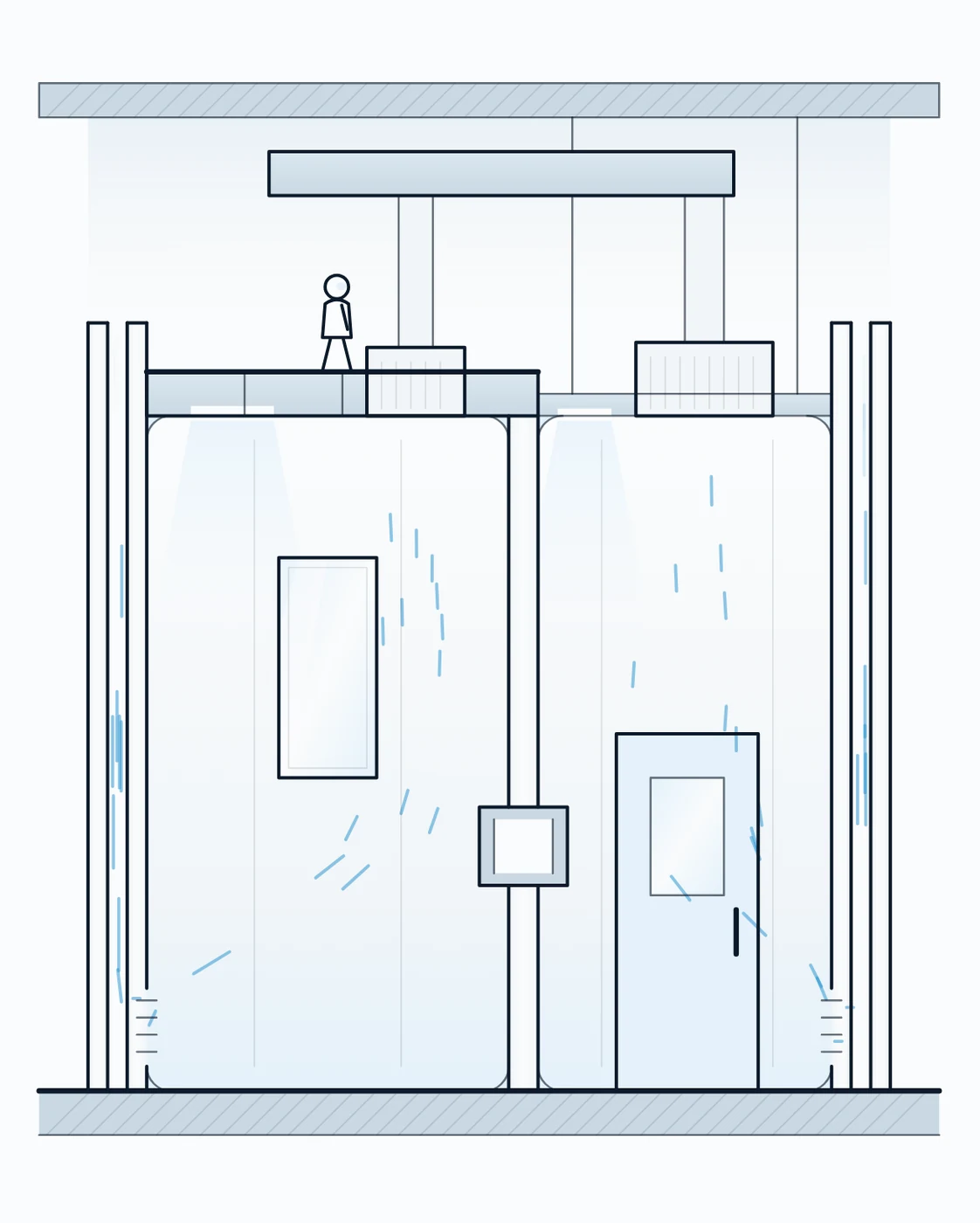
VHP pass-through chambers are generally double wall construction with internal coved work surfaces for ease of decontamination and cleaning. The end application determines the number of doors in the chamber. These are sealed doors and available as doubled walled SS execution or single piece tempered glass of appropriate thickness.
VHP pass-through chambers are designed and manufactured for specific hourly leak rates and conform to classification as per ISO guidelines. Standard execution conforms to ISO class 4 for hourly leak rate.
The internal and external dimensions for the entire pass-through system can be customised based on the application, materials to be transferred and the layout. Add-ons like rack and trolley arrangement for material stacking per cycle and a custom arrangement to ensure proper VHP exposure to materials are also offered for ease of materials handling, transfer and operational efficiency.
The VHP pass-through filtration system is re-circulatory to ensure ISO 5 classification inside the working chamber. It can be integrated seamlessly with manual and automated stand-alone VHP systems available commercially for bio-decontamination cycle. With respect to ambient, the VHP pass-through system works under positive pressure. It can be programmed and controlled via PLC per pre-defined SOP
At Fabtech we have developed optimised VHP cycles and aeration times to ensure faster availability of the system for the next cycle.
- Standard validation protocols executed at site include
- Leak testing of the chamber
- HEPA integrity testing
- Velocity measurement
- Non-viable particle monitoring
- Light intensity
- Sound level
- VHP Cycle development (targeted bio-burden reduction for particular load and consistency of results)
Fabtech first successfully conceived, designed, manufactured and validated India's first VHP pass-through system for Ranbaxy, Dewas (now Teva Pharma) in 2013. Since then we have been consistently upgrading our offering to ensure evolving client needs. Our most recent installation was at Zydus Biologics, Ahmedabad.
If you would like to know more about our VHP pass-through systems, please get in touch using the form below.